Statewide ADU bill draws broad support and sharp local‑control pushback
Summary
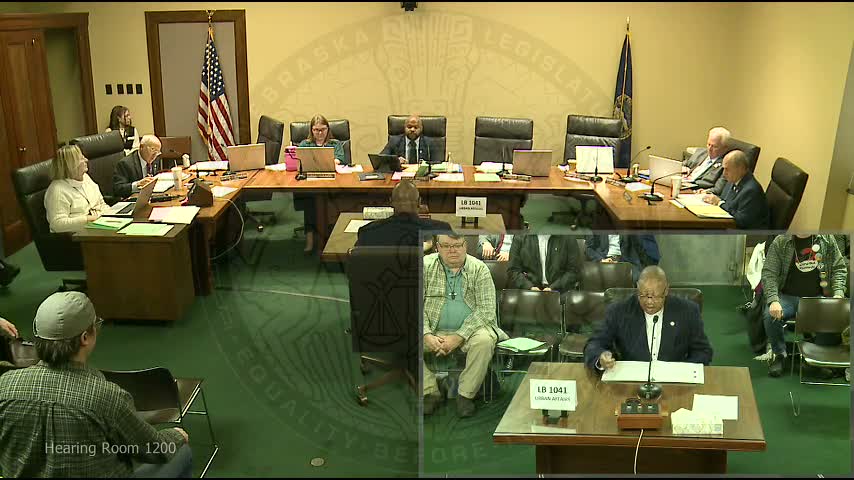
Sen. Victor Rountree's LB 10‑41 would require municipalities to allow accessory dwelling units statewide. Builders, AARP and housing advocates supported the bill; cities and municipal leagues urged amendments, saying the draft would preempt local zoning and create inspection and infrastructure burdens.
Senator Victor Rountree introduced LB 10‑41 to create a standard statewide approach allowing accessory dwelling units (ADUs) — small attached or detached units on the same lot as a single‑family home — arguing the measure would expand housing options and help aging in place.
Proponents, including design‑builders and advocacy groups, described ADUs as a low‑cost, flexible housing solution. Builder Nick Knisky said ADUs let families "remain close to one another without sacrificing independence or dignity" and described typical units of 450–750 square feet. Spark's Zeke Rouse and AARP Nebraska framed ADUs as age‑friendly and environmentally efficient additions that can be built without new roads or major public infrastructure.
Opponents — notably municipal and county organizations and the city planning offices of Lincoln and Omaha — said the bill as drafted would preempt key local tools (setbacks, lot‑coverage limits, design standards, parking requirements) and could impose unfunded inspection and registration costs. Lynn Rex of the League of Nebraska Municipalities warned the draft "takes away local control" and urged working with municipalities to craft a version that preserves neighborhood character and addresses infrastructure constraints.
Committee members sought technical fixes on issues including HOA covenants, parking, impervious‑surface limits, foundation requirements for garage conversions and whether ADUs could be used as rentals. City witnesses noted many municipalities are already revising codes and urged a collaborative approach; proponents asked for certainty so developers and homeowners know whether projects will be approved. Senator Rountree said he is willing to work with stakeholders to refine the bill.
No committee vote occurred; the hearing produced a list of recommended technical changes and a clear directive from multiple city representatives to align any statewide policy with local planning realities.