Get AI Briefings, Transcripts & Alerts on Local & National Government Meetings — Forever.
Sponsor asks committee to hold bill to let work-zone cameras flag drivers 11+ mph over limit
Loading...
Summary
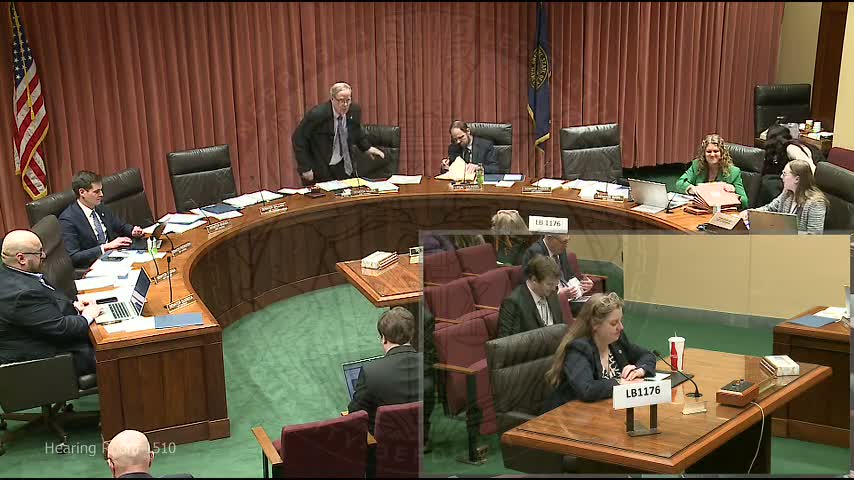
Sen. Wendy DeBoer introduced LB1176 to permit camera-assisted enforcement in highway work zones for drivers 11+ mph over the limit, but asked the committee to hold the bill after privacy and implementation concerns were raised by civil-liberties groups.
Sen. Wendy DeBoer introduced LB1176 as a targeted safety proposal to allow speed-control enforcement in highway work zones. Under the proposal, a speed-control system with two detection points would identify drivers going 11 or more miles per hour over the posted limit in a work zone where workers are present; a downstream officer would then be provided the information and could stop the vehicle.
DeBoer said the measure is limited to work zones that meet several conditions: a worker must be present, signage must indicate a speed-control enforcement system is in use, and a law-enforcement officer would be stationed near the end of the work zone to act on validated detections. She said the model draws on programs used in Arkansas and Kentucky but asked the committee to hold the bill this year for additional work, citing unresolved implementation questions.
Justin (transcript: Justin Hoogly/Hubly) of AFSCME Local 61 urged action to protect highway maintenance workers, saying the union has witnessed fatal incidents and supports enforcement tools alongside education and employer practices. “Every single one of our highway maintenance workers who works on the interstate has a story where they were clipped by a mirror,” he testified.
Spike Eichol of the ACLU of Nebraska warned of privacy and data-retention risks if camera systems are used in enforcement, noting existing license-plate-reader statutes and contracts can give private vendors broad rights to data. Eichol said those systems have at times been repurposed for immigration enforcement and urged careful statutory limits before authorizing a new camera-based enforcement model.
DeBoer closed by asking the committee to hold LB1176 for further consideration rather than advancing it this session; no committee vote was taken. The hearing record included proponents, opponents and a mix of online comments.