
Sen. Jacobson pitches voluntary Community Improvement Districts to finance neighborhood infrastructure
Get AI-powered insights, summaries, and transcripts
Sign Up Free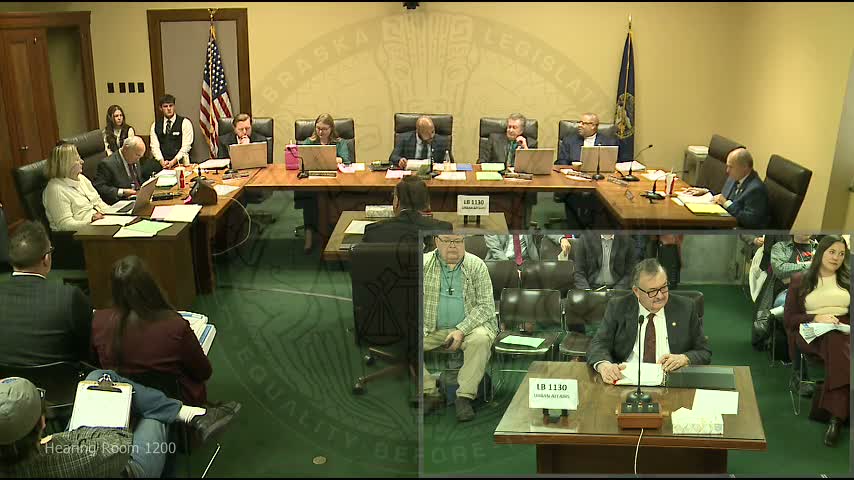
Summary
Sen. Mike Jacobson introduced LB 11‑30 to allow property owners inside municipalities to form voluntary Community Improvement Districts that issue tax‑exempt debt and levy district‑specific assessments to pay for streets, sidewalks and utilities, with city approval and audit oversight.
Senator Mike Jacobson introduced Legislative Bill 11‑30, the Community Improvement District Act, saying it would give cities and villages a voluntary, locally controlled option to finance neighborhood infrastructure without using state general funds. "This is not a mandate. It's an opt in framework," Jacobson told the Urban Affairs Committee while outlining formation steps: a neighborhood petition signed by a majority of property owners, a public hearing with notice to affected owners, and city or village council approval.
Jacobson said a CID would be governed by a locally elected board of property owners, operate under open‑meeting laws, file annual budgets and audits, and remain accountable to municipal officials and the state auditor as a limited backstop. He described the financing as narrowly targeted to properties within the CID boundaries and authorized to issue tax‑exempt municipal debt, lowering borrowing costs for projects that benefit only participating owners.
Proponents — including the Welcome Home Coalition's Adam Flanagan — told the committee CIDs can help address Nebraska's housing shortage by spreading upfront infrastructure costs over longer terms. Flanagan said, "Nebraska is facing a documented housing shortage of more than 120,000 units statewide," and argued that long‑term bonding can make development and redevelopment financially viable for both urban and rural communities.
Committee members pressed for details about liens, city standards, boundary size and eminent domain. Jacobson and supporters said CID assessments would function similarly to existing special assessments and carry priority lien status; they emphasized that public improvements built under a CID must meet municipal code and that the city council retains final approval for any exercise of eminent domain.
Cities and municipal representatives testified neutrally to the committee about technical clarifications needed to align CIDs with existing local planning processes. The city of Lincoln recommended additional statutory alignment and flagged sections of the 60‑plus page bill that may require changes to mesh with municipal development review.
Jacobson told the committee he has worked with the Auditor of Public Accounts and the Department of Transportation on technical language to define agency roles, audits and coordination with state highways where relevant. He urged the committee to advance the bill so communities that wish to self‑finance neighborhood upgrades could do so under local oversight.
The committee did not take a final vote during the hearing; Jacobson said subject matter experts would appear after his opening presentation and recommended moving to the next step for more detailed drafting.