Methuen schools report literacy rollout progress, DESE tutoring award and expanded student supports
Loading...
Summary
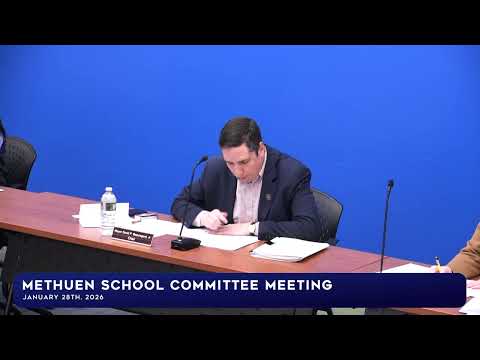
At its Jan. 28 meeting the Methuen School Committee received a quarter-2 update on CKLA curriculum rollout, benchmark results and supports. District leaders said they were awarded DESE high-dosage early-literacy tutoring seats and described steps to strengthen MTSS, career planning and mental-health screening.
Dr. Golovsky presented the district's quarter-2 update to the Methuen School Committee on Jan. 28, outlining the CKLA curriculum launch, benchmarking work and expanded student supports across the district.
“This is our quarter 2 update,” Dr. Golovsky said as the presentation opened, describing professional development, PRISM grant support from the Massachusetts Department of Elementary and Secondary Education (DESE) and the first months of classroom implementation. He said teachers had been using CKLA materials for about three months before midyear benchmarking and noted administrators are unpacking implementation protocols during February professional development.
Supervising humanities staff explained how the district is creating small, skill‑focused reading groups for students identified as needing extra support. A supervisor described CKLA intervention plans that “calibrates that data to create groups” and provides short, targeted lesson plans intended to be delivered multiple times per week.
Board members asked for clarity about assessments. District staff and supervisors emphasized that DIBELS and DreamBox are being used as benchmarks and diagnostic tools to monitor growth rather than as direct measures of statewide proficiency. A supervisor said parent information letters from CKLA were sent home and that middle‑of‑year results will be shared with families to explain progress and next steps.
Dr. Golovsky announced the district won a DESE High‑Dosage Early Literacy tutoring award and provided seat allocations by school: 80 seats at Timoney, 80 at Tenney, 60 at CGS, and 30 at Marsh. He said the initial focus will be grade‑1 students identified in the lowest (red) benchmark category and that the district may hire local staff to deliver the tutoring. “We were awarded,” he told the committee, noting the award should reduce pressure on reading‑specialist caseloads and allow reallocation of some in‑district supports.
The presentation also covered Objective 2 work to revise the District Curriculum Accommodation Plan (DCAP) and MTSS structures. The DCAP revision team identified sections such as Assessment, Executive Functioning, Behavior and Instruction and is working to make the plan a practical tool teachers can use without excessive paperwork. Teams are mapping essential tier‑1 practices and which data pieces should trigger tiered support conversations.
On student mental health, the district reported an 81% participation rate in fall screenings for grades 5–12 and described generally improved trends in anxiety and depression measures in grades 5–8 compared with prior administrations. Staff explained the district’s opt‑out and parent‑notification process (a two‑week notice and the ability for parents to view screener questions in advance) and said referrals to partners such as Care Solace and Cartwheel are augmenting counseling capacity.
Objective 3 updates included a community workshop planned for Feb. 5 at Nevins Memorial Library to solicit public input on a “vision of a graduate,” and early Career and Technical Education (CTE) exploratory results. Presenters said 94 students participated in semester 1 exploratory courses; among those respondents, 51% indicated they intend to pursue a CTE pathway, 41.5% said maybe and 7% said they were not interested. Staff said the district will follow up with guidance counselors to formalize student pathway choices.
District leaders closed by describing ongoing caseload monitoring and bullying‑prevention planning, noting curricular units and state resources the district will adopt and the phased rollout of professional development for staff. The quarterly review concluded with committee members thanking staff and asking for follow‑up materials, including disaggregated reading‑specialist caseload data and clearer benchmarking crosswalks for parents.
Next steps: staff will share requested benchmarking detail and reading‑specialist caseload numbers with the committee and continue implementation of high‑dosage tutoring and DCAP revisions.