
Lodi Unified unveils plan to reorganize into a new Teaching and Learning area, board asks for clear metrics
Get AI-powered insights, summaries, and transcripts
Subscribe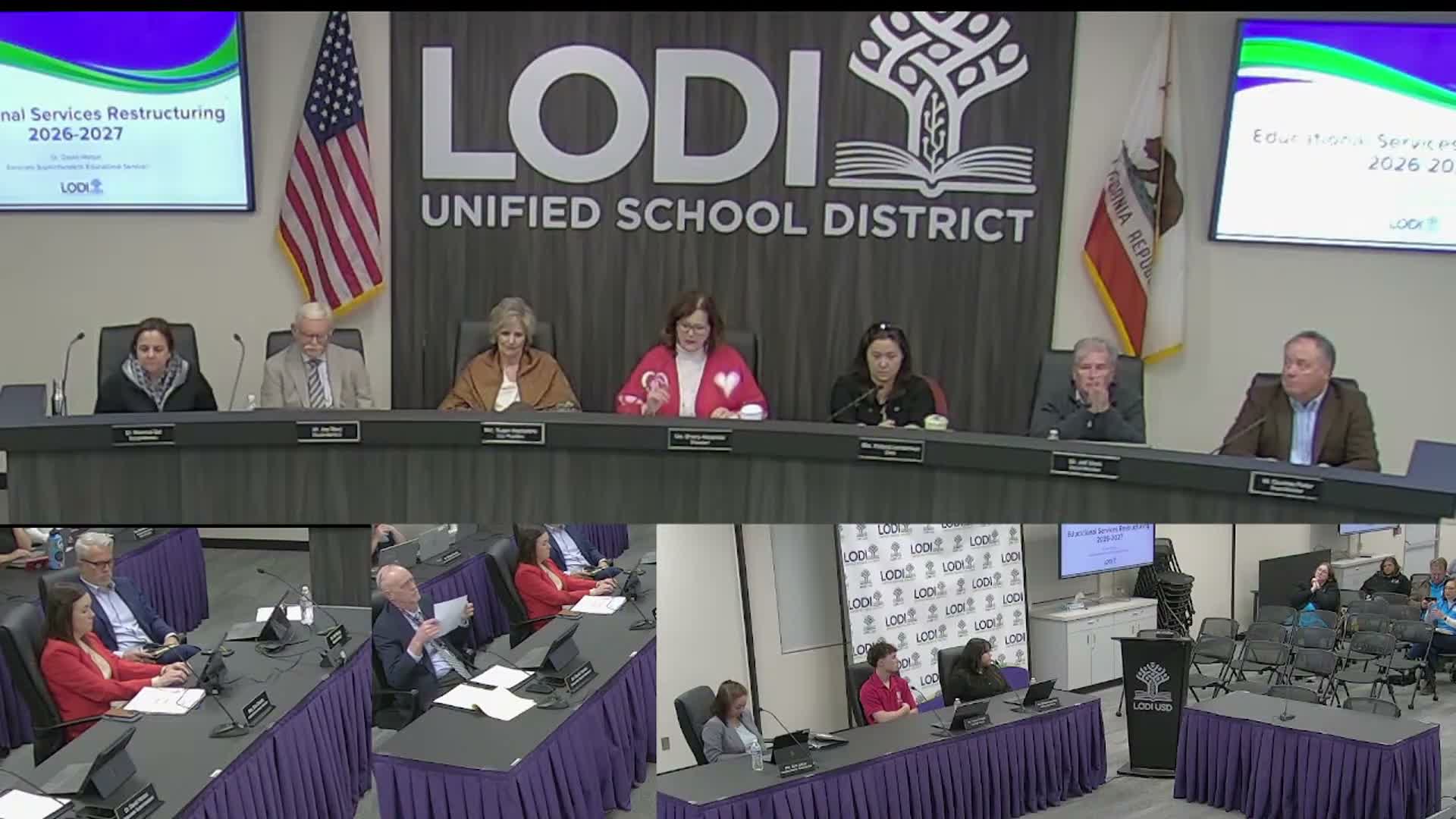
Summary
Associate Superintendent Dr. Horton outlined a proposal to reorganize educational services into a new Teaching and Learning area and a reconfigured College & Career unit, promising net savings and improved instructional coherence; board members pressed for short‑term metrics, guardrails and a clearer implementation plan before taking action.
Associate Superintendent Dr. Horton presented a reorganization plan Feb. 3 that would create a new Area 1 called Teaching and Learning to consolidate curriculum, assessment, English learner services, instructional materials and professional learning, and would reconfigure Area 2 to focus on College & Career and extended learning. Dr. Horton said the phased rollout would begin in 2026 with fuller implementation in 2027 and that the proposal is intended to improve alignment, reduce duplication and produce net cost savings as responsibilities are reassigned.
Why it matters: The district’s leadership argued the change is meant to give schools more consistent instructional support and to make it easier for principals and teachers to collaborate around common strategies. Dr. Horton emphasized a student-centered approach, saying, “This is about student centered decision making.” He described the goal as creating clearer pathways for improving classroom instruction and accountability.
What the proposal includes: Under the plan, teaching-and-learning leaders would supervise elementary and middle schools with directors responsible for curriculum, assessment and English learner services; college and career would oversee high school dual enrollment, CTE and advanced placement pathways; special education and student support services would remain as currently structured. Dr. Horton said curricular ordering, textbook distribution and instructional media would be centralized to support teachers more efficiently.
Board concerns and follow-up: Several board members pressed for measurable short-term indicators and implementation guardrails. Member Miss Linderman asked when the board would receive the statistical analysis and a detailed plan tying data trends to the decision to restructure; Dr. Horton said the district’s assessment, research and evaluation team is developing formative measures and suggested early indicators might include the number of teachers trained and the degree to which new processes are used in classrooms. Mr. Porter and others asked whether simply rearranging existing staff would produce different results and urged weekly or quarterly monitoring and clearer accountability lines; Dr. Horton said oversight would rest with his office and that part three of the presentation will describe supports and monitoring in greater detail.
Next steps: Dr. Horton told the board the administration will return with an action item at a future meeting for the board to consider. No final vote on restructuring occurred Feb. 3; the board requested additional documentation on metrics, personnel capacity and implementation timelines before taking action.
Context and evidence: The presentation included a timeline showing phased implementation beginning in 2026 and aiming for full roll-out by the 2027 school year. Dr. Horton cited a site visit to a neighboring district as one example of how sustained visible-learning work had coincided with multi-year gains in several measures. The board and public asked for more granular, short-term success markers and how the changes would affect support staff and administrators.