Get Full Government Meeting Transcripts, Videos, & Alerts Forever!
Get email alerts on the City Budget Overview topic
No spam. Unsubscribe anytime.
Baltimore budget office outlines FY26 plan, cites Workday transition and calls to reduce retroactive supplementals
Summary
The Bureau of Budget and Management Research presented a $3.1 million FY26 proposal and performance targets; council members pressed for earlier warnings about agency overspending, transparency on fee increases and follow-ups on TIF and affordable-housing revenues.
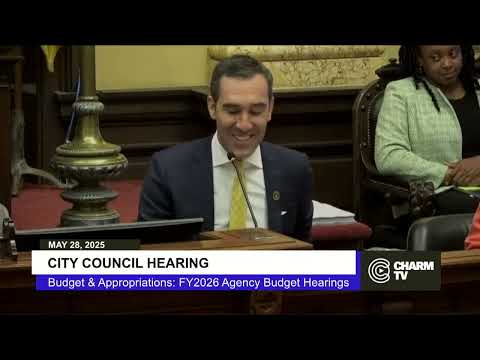
The Baltimore City Bureau of Budget and Management Research (BBMR) presented its FY26 recommendations and performance targets on day one of the Budget & Appropriations Committee.
Laura Larson, the city’s budget director, said BBMR’s recommended budget for the bureau is $3,100,000 to fund 19 positions and outlined performance goals including publishing five management research reports, achieving 2% accuracy in revenue forecasts and turning around Board of Estimates items in three days. Larson described BBMR’s role in quarterly budget-to-actual forecasting and said her service ended FY24 with a surplus even as some city agencies ran deficits.
Council President Zeke Cohen opened a line of questioning by noting the Department of Finance overspent its FY24 budget by $4.2 million and asked what fiscal controls are in place to prevent repeat overspending. Larson pointed to BBMR’s quarterly projections process and internal briefings with the city administrator and mayor’s office as the primary oversight tools. She said several FY24 deficits reflect growing pains tied to the city’s Workday implementation and a procurement backlog that created double purchases and mischarged accounts.
Several council members urged changes to a longstanding practice of approving retroactive year-end supplementals to balance agency budgets. Larson proposed coordinating meetings with the mayor’s office, the council president’s office and the committee chair in July and August to discuss operational options intended to reduce the need for retroactive supplementals and to improve quarterly reporting to the council.
On fees, BBMR is conducting the first comprehensive citywide fee study since 2008 covering more than 2,000 fees. Larson said the study was divided into three groups; group 1—largely fees in fire, housing and transportation—will be wrapped up this summer and she agreed to coordinate sharing a list of the group-1 items with council offices.
Larson said 12 general-fund agencies were projected in the third-quarter forecast to end FY25 in deficit and described targeted actions—pausing discretionary items, adding personnel-action reviews, and identifying offsets—to rein in spending. On property-tax projections, Larson said the primary data source is state assessment information from SDAT but BBMR also monitors vacant-property rehabs and other changes monthly. She said roughly $2,000,000 of property-tax revenue was removed from the general fund for FY26 to seed a newly approved noncontiguous TIF, and that future incremental value from rehabbed properties will flow to the TIF to support borrowing.
What’s next: BBMR committed to follow-ups requested by council members, including a list of properties included in the TIF/rehab accounting, the portion of transfer-and-recordation revenue expected for the Affordable Housing Trust Fund, and further detail on agency deficits and offsets. The committee paused to take up other finance presentations later in the hearing.