Get Full Government Meeting Transcripts, Videos, & Alerts Forever!
Get email alerts on the Arpa Funding topic
No spam. Unsubscribe anytime.
Baltimore officials say all ARPA awards obligated; $473.4 million spent by June 30
Summary
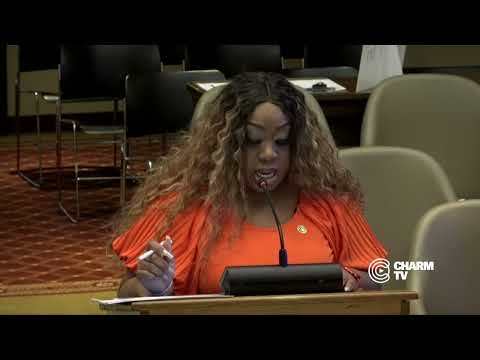
At a Budget & Appropriations Committee hearing, the Mayor's Office of Recovery Programs reported that Baltimore has obligated $641,170,126 in ARPA funds and expended $473,400,000 as of 06/30/2025, with deadlines to obligate and expend noted and agency-level spending variances explained.
Baltimore City officials told the City Council's Budget & Appropriations Committee that the city has fully obligated the $641,170,126 in American Rescue Plan Act (ARPA) state and local fiscal recovery funds awarded to Baltimore and has expended $473,400,000 as of June 30, 2025.
Shamaya Kearney, deputy city administrator and acting chief recovery officer for the Mayor's Office of Recovery Programs, said the obligation deadline was Dec. 31, 2024, and the statutory expenditure deadline is Dec. 31, 2026. "All $641,170,126 awarded to Baltimore City has been obligated," Kearney said during the quarterly oversight briefing, and she noted the office filed the required annual report with the U.S. Department of the Treasury on July 31, 2025.
Kearney reported that the city has increased spending by $38,500,000 since the last quarter and that, overall, agencies have expended about 70% of total obligated funds—roughly $345,000,000. She said 65 of 126 grants directly awarded by the recovery office to city agencies, quasi-government agencies and nonprofits have been closed, representing about $147,700,000 in expenditures. Quasi-government organizations and nonprofits have expended approximately 86.8% of their obligated funds.
Kearney highlighted a small number of agencies with under-50% spend rates and walked the committee through reasons for slower expenditures in specific areas, including capital timing and later execution of grant agreements. She told the committee that the Department of Transportation's ARPA allocation for sidewalks and ADA ramps experienced delays tied to contract awards, including a protest on one contract, but that notices to proceed have been issued and work is on track for completion in June 2026.
Council Chair Danielle McCray asked for concrete deliverables tied to new staffing in the Office of Performance and Innovation (OPI). Kearney said the OPI allocation is primarily for staffing and development of a data warehouse, and described work underway to update agency performance plans, create a dashboard for performance metrics and compile a data dictionary that will clarify measures and data sources. "So the dashboard as well as those comprehensive sit downs are things that we'll be working on in the next several months," Kearney said, and she agreed to provide the committee with a schedule and specific agency launch numbers before the next quarterly hearing.
Kearney also noted a slide error regarding the Baltimore City Public School System (BCPSS): the actual expenditure rate is 42%, not 37, and she said invoices and construction activity (including work at Maryville High School's football field, expected to begin Oct. 25 as presented) factor into the lower spend percentage.
The recovery office offered to provide additional detail on the seven nonprofit organizations with under-50% spend and to follow up on agency-specific schedules for CityStat implementation. The office directed the public to arp.baltimorecity.gov for project-level information.
The committee recessed after the exchange; the recovery office will return with more detailed schedules and deliverable timelines at future quarterly hearings.