Get Full Government Meeting Transcripts, Videos, & Alerts Forever!
Get email alerts on the Accountability Alternatives topic
No spam. Unsubscribe anytime.
Residents demand alternatives to police and public dashboards after three police-involved deaths
Summary
Family members, advocates and medical professionals urged the council to remove police from many behavioral-health responses, create alternative non-police responders, require transparent public data (quarterly dashboards) and investigate the recent deaths; speakers repeatedly used the slogan "health care, not handcuffs."
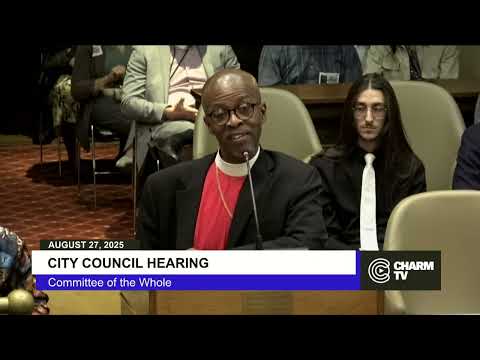
A large portion of the Aug. 27 hearing was reserved for public testimony, during which families, community groups and clinicians urged bold changes to the city's crisis-response model and accountability for recent police-involved deaths.
Bridget Dobbins, who spoke on behalf of Paitasha Brooks's family, said repeated police visits did not prevent a deadly outcome and demanded immediate system fixes: "We need to fix that problem," she said. Community groups including the People's Power Assembly and the Campaign for Justice, Safety, and Jobs called for independent neighborhood safety committees, community-led oversight, and large-scale investments in non-police crisis responders.
Medical professionals at the hearing urged expanding peer and clinician-led alternatives to police and emphasized public education and case-management systems to reduce repeat encounters. Multiple speakers recommended a public dashboard with metrics such as diversions, co-notifications, emergency petitions, 988 transfers, mobile-crisis-team availability and hand-off lag by district. Several advocates called for reallocation of police budget dollars to fund alternatives and for independent investigation of the three recent deaths.
Speakers from organized coalitions and labor said training alone would not be enough to prevent future deaths and argued that a separate, well-funded crisis-response infrastructure — modeled on community responder programs in Denver, Albuquerque and Durham — should be developed and operated with community oversight and transparency.