Get Full Government Meeting Transcripts, Videos, & Alerts Forever!
Get email alerts on the Crisis Response System topic
No spam. Unsubscribe anytime.
Baltimore council hearing exposes gaps in crisis response after three recent deaths
Summary
Council members and agency leaders told a Committee of the Whole hearing Aug. 27 that Baltimore lacks capacity and coordination to reliably divert behavioral-health calls from 911 to 988, with officials citing thousands of 911 behavioral-health calls and only a handful of diversions; the council requested a seven-business-day plan to close gaps.
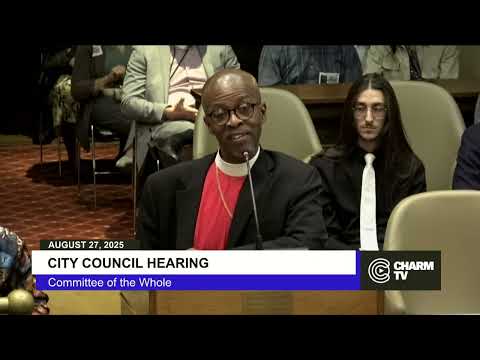
Baltimore City Council President Zeke Cohen opened a Committee of the Whole hearing Aug. 27 saying "no person in our city should lose their life to a mental health crisis," and urged urgent fixes after three recent deaths involving police during behavioral-health encounters. Cohen cited a consent-decree implementation review that recorded 4,270 911 calls coded as behavioral-health calls since July 2024 and said only 28 of those were diverted to 988.
The hearing convened community leaders, agency heads and dozens of residents to probe why so few calls reach the 988 helpline and why mobile crisis responses take far longer than national and state standards. Jamal Turner, chair of the Police Accountability Board, said, "We are here today because something is fundamentally wrong with how our city handles behavioral health emergencies," and urged immediate timelines and resources to avoid further deaths.
City agencies described the system in place and its limits. Director Tania Reddick of the 911 emergency communications center described the center's triage protocol, which uses International Academies of Emergency Dispatch guidance (the "25 card") and requires a first- or second-party caller for many diversions. Acting Health Commissioner Krista Taylor and Behavioral Health System Baltimore (BHSB) leaders noted growth in 988 call volume and in mobile crisis dispatches but acknowledged long response times: BHSB slides presented to the council showed monthly average mobile-crisis response times in 2025 in the 92'to'136 minute range, well above the one'hour urban standard.
Baltimore Police Department leaders outlined existing training: 24 hours of behavioral-health awareness in the academy and annual 8-hour refreshers, with a 40-hour Crisis Intervention Team course offered voluntarily. Commissioner Kevin Worley agreed with the council that all recruits should receive the 40-hour course but said changing the department's practice requires approval within the consent-decree oversight process and additional vendor and funding capacity.
Several council members and community speakers linked the operational problems to a lack of a single accountable office. President Cohen asked the health department and the deputy mayor to return within seven business days with a cost-and-capacity analysis that would define what is required to staff and operate a mobile crisis system that can meet response-time standards and reliably accept diversions from 911.
The hearing closed with broad agreement on next steps: agencies will deliver requested reports, BHSB and city partners will work on data-sharing and public dashboards, and the council will continue oversight as the city weighs investments to expand clinician-led responses and alternatives to police involvement in behavioral-health emergencies.