
Council presses interagency plan to keep at-risk youth from slipping through the cracks
Get AI-powered insights, summaries, and transcripts
Subscribe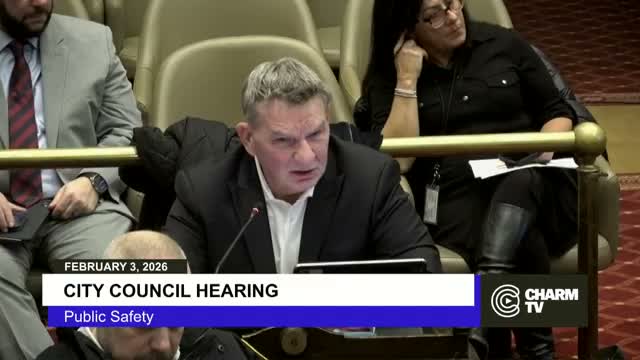
Summary
Council members pressed police and youth services for a clearer interagency protocol after repeated incidents involving the same juveniles; staff committed to a 30-day status update on formalizing protocols and supports.
Council members told the Public Safety Committee they are concerned a small group of juveniles repeatedly commits property damage, vehicle theft and other offenses and then returns to the street. Chair Mark Conway and others asked whether the city and state juvenile services can do more to intervene earlier.
"When you see that red flag being raised, these are some of the conversations we've been having in YouthStat," a director involved in interagency coordination said, describing ongoing talks between the police, Department of Juvenile Services (DJS) and other partners to formalize protocols that connect young people and families to services instead of cycling them back into the system.
Chief Lisa Reynolds described new community-engagement tools and youth programs intended to prevent escalation, including a youth advisory board formed with ACE Academy High School and a youth-work summer program run through the mayor's office. Reynolds said the department rolled out community engagement forms citywide on Jan. 26 and has collected about 1,200 forms to date to better track outcomes and inform district crime plans.
Committee members asked for a concrete follow-up: staff committed to provide a status update in roughly 30 days on where interagency efforts stand and what changes will be implemented to improve monitoring, services and accountability for at-risk youth.
The committee also heard examples offered by police of youth who have been shot multiple times and of cases where families need additional supports—points staff said they are trying to address through coordinated interventions and data-sharing within legal limits.