
U.S. outlines investments, stockpiling and permitting reforms to rebuild domestic critical minerals supply chains
Get AI-powered insights, summaries, and transcripts
Subscribe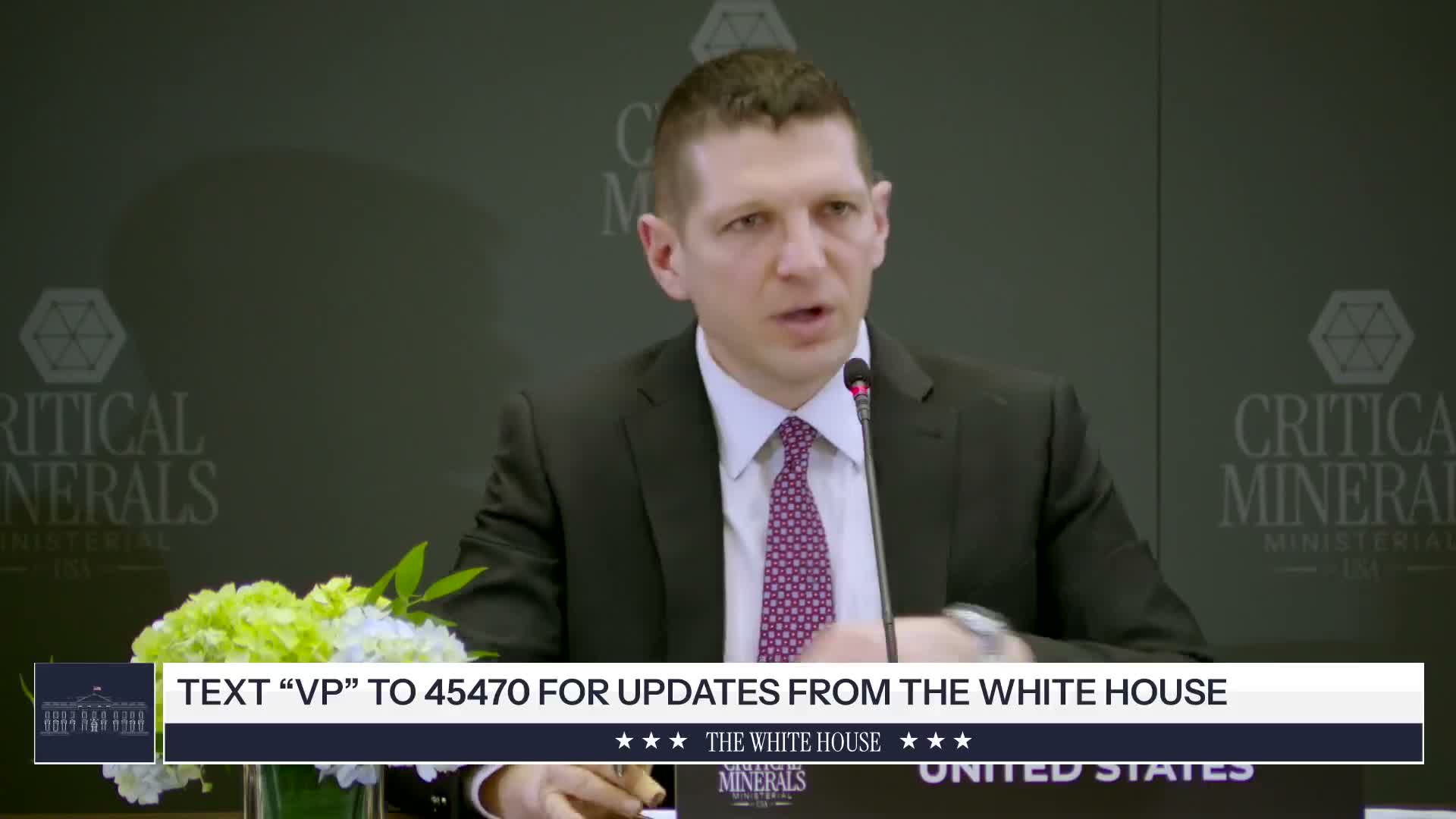
Summary
Secretary Rubio described four U.S. initiatives—investment in projects, a national stockpile, protections against strategic dumping and permitting reforms—to accelerate mining and processing capacity at home and with selected partners, including newly announced public financing vehicles.
U.S. Secretary Rubio used his ministerial remarks to lay out a four-part domestic strategy to expand U.S. mining and processing capacity and to make the country a more attractive place for mineral investment.
Rubio said the United States had long neglected its mining sector and that restoring it is crucial for manufacturing and national security. He listed four key initiatives: invest in mining projects using public–private funds and equity, create a strategic stockpile, protect domestic miners from market distortions, and rebuild the mining workforce and permitting ecosystem.
On financing, Rubio cited public-private partnerships and said the administration has mobilized large-scale lending authority to support critical minerals. He said Congress provided $2,000,000,000 over the summer for stockpiling in the national defense stockpile and announced Project Vault as a $12,000,000,000 vehicle within the Export-Import Bank to create a civilian strategic critical minerals reserve. "This is the first time in the history of the United States we've ever stockpiled minerals for our civilian economy," he said.
Rubio said the government is taking steps to shield domestic companies from strategic dumping and price distortion and promised regulatory changes to accelerate permitting. He cited an S&P finding that average mine development timelines in the U.S. have been 29 years and described a new federal permitting priority list and faster processing for environmental impact statements.
Rubio closed by inviting international partners to collaborate on investment and implementation of these initiatives, framing them as part of a multilateral effort to rebuild global mining in a "fair and balanced way." The ministerial moved into plenary sessions to negotiate technical and financing arrangements.