Department of Labor seeks state fee to stabilize staffing and program administration amid declining federal grants
Summary
LB1173 would authorize an annual employer fee (up to $250) remitted via existing quarterly wage reports to fund the Department of Labor's administration, including unemployment insurance administration, wage‑and‑hour enforcement and workforce programs. The department argued federal admin grants are shrinking; business groups raised fairness and flat‑fee concerns.
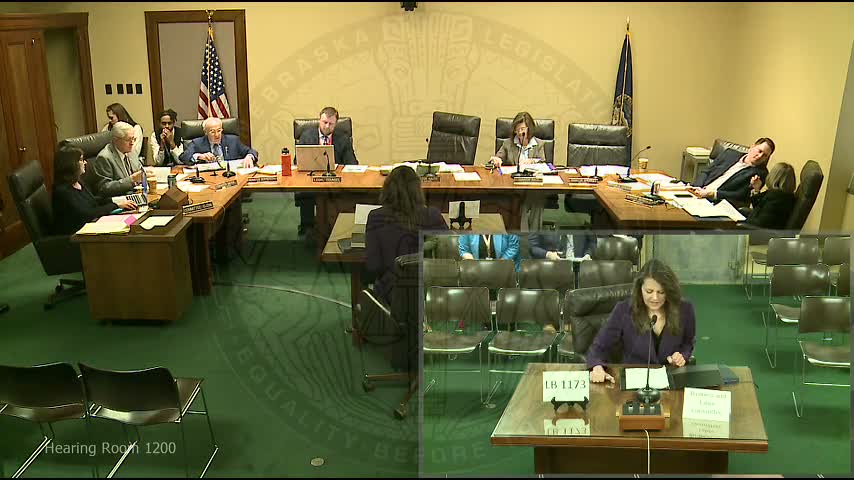
Sen. Kathleen Kauth introduced LB1173 at the Department of Labor's request to create a stable state funding stream for labor administration. The bill would authorize an annual filing fee (up to $250 per employer) collected through the existing quarterly wage reporting process and deposit those dollars into a redefined contractor and professional employer registration cash fund (renamed to allow broader labor administration use).
Commissioner Katie Thurber testified the department is about 98% federally funded for administration and has seen federal admin funding decline; federal shutdowns pose an operational risk. She described efficiency gains in claim throughput and tax operations but warned persistent federal instability could force service reductions without a state funding mechanism. The proposal would allow the commissioner to use fees for unemployment admin, labor standards enforcement, and workforce development grants.
Business groups, including the Nebraska Chamber and local chambers, and the Nebraska Grocery Industry Association, expressed concern about a flat annual fee that would charge the same $250 to very small employers as to large companies, and they urged a scaled approach based on payroll or employee counts. They also argued some of the department’s current tasks stem from additional statutory duties (e.g., paid‑leave enforcement) and recommended prioritization before new fees are imposed.
Committee members asked technical questions about coverage (employers subject to Nebraska's Employment Security Law, roughly 60,000 employers), the timing for collection (annual fee remitted via quarterly reports), and whether the proposal could better scale by employer size; the department signaled willingness to engage on technical alternatives.
Next steps: The department will work with business stakeholders on fee structure and seek to better specify the initial target fee level and any exemptions/scaling.