Senator’s plan would repurpose property tax credits into TEOSA equalization aid to reduce levy disparities
Loading...
Summary
Sen. Jana Hughes’ LB 10 38 would redirect existing property tax credits and some aid into Nebraska’s school funding formula (TEOSA), lower the maximum general-fund levy and adjust internal valuations to expand equalization aid. Proponents call it structural reform; opponents warn of fiscal and distributional risks and urge more district-level modeling.
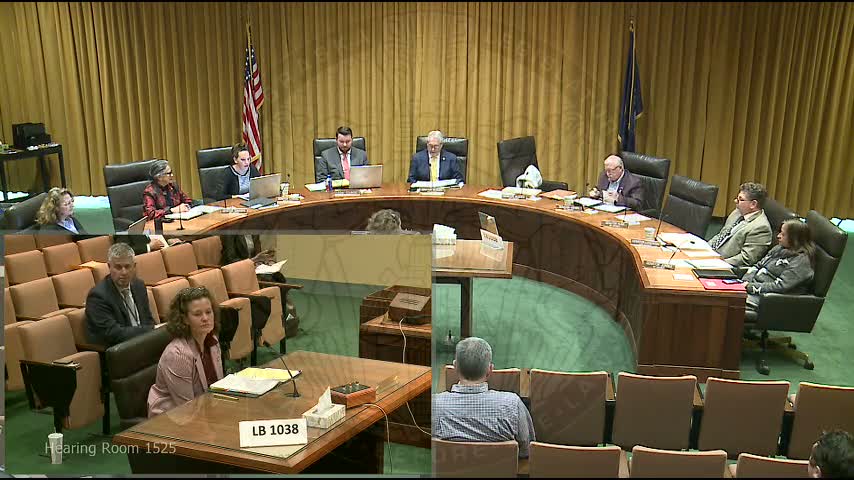
Senator Jana Hughes introduced LB 10 38 to the Education Committee, proposing a sweeping rewrite of how Nebraska funds K–12 schools that would repurpose property tax credits and other existing state aid into formula-driven equalization aid under the Tax Equity and Educational Opportunity Scholarship Act (TEOSA).
Hughes told the committee the bill’s goal is to bring school district general‑fund levies closer together — to a range of roughly 30¢ to 50¢ per $100 of taxable valuation — by lowering the maximum levy and by changing the valuations that TEOSA uses to calculate local resources. “The goal of LB 10 38: repurpose the property tax credits … to buy down the maximum amount that school districts can levy,” Hughes said in her opening. She described technical changes — cutting agricultural valuation inside TEOSA from 72% to 42% and residential/commercial from 96% to 86% — and creating a base‑levy adjustment so a district’s general‑fund levy would not fall below 30¢.
Why it matters: Hughes said the changes would expand equalization aid from about 50 districts today to an estimated 242 of 245 districts under current modeling assumptions, reduce the wide disparities in levies that affect farmers and homeowners who own identical parcels in different districts, and make state support more transparent by linking it to the TEOSA formula rather than back‑end tax credits.
Supporters’ case: Rural and policy witnesses praised the concept. Jack Moles, Executive Director of the Nebraska Rural Community Schools Association, said bringing levies together is “great state policy” and welcomed the proposal’s emphasis on formula aid. Policy groups and some districts said redirecting credits into TEOSA would better target relief to districts with low valuations per student and help avoid ad‑hoc tax‑credit spending that does not lower levies.
Opponents’ concerns: Lincoln Public Schools’ associate superintendent Liz Standish and representatives of large urban districts warned that eliminating or shrinking components such as the averaging adjustment and allocated income tax could disproportionately affect large, lower‑cost districts. Multiple witnesses urged more district‑level “gold standard” modeling and flagged fiscal risks if the Legislature did not fully fund the larger TEOSA obligations the bill would create. “Revenue composition matters,” Standish said, noting that redistributing income tax or credits could raise property taxes in some high‑income areas if not managed carefully.
Technical and fiscal issues: The committee pressed for precise modeling; Sen. Hughes and several witnesses noted a forthcoming statewide model from the Department of Education (identified in testimony as the preferred modeling source) that they said committee members should review before floor debate. Several rural witnesses argued the bill corrects long‑term distortions from valuation growth in agricultural land and the uneven effects of grant‑style foundation aid and tax credits.
What’s next: The committee closed the hearing without a vote and the sponsor filed a placeholder floor amendment to address technical corrections. Multiple witnesses — supporters and critics — urged additional district‑level modeling and fiscal analysis before any committee advancement.
Provenance: testimony and debate from committee hearing (topicintro: SEG 081; topfinish: SEG 2581).
Speakers (first appearance in transcript): Senator Jana Hughes (introducer) — SEG 104; Jack Moles (NERCSA) — SEG 1046; Lynn Nayschleb — SEG 1123; Connie Connicknoche (OpenSky) — SEG 1230; Daniel Russell (Stanford Schools) — SEG 1301; Liz Standish (Lincoln Public Schools) — SEG 1512; Kyle Fairburn (GNSA) — SEG 1808.
Authorities referenced: TEOSA (Tax Equity and Educational Opportunity Scholarship Act), the historical “Gould” court case referenced by the sponsor, property tax credit statutes (tier 1 and tier 2) and the statutory local effort rate (LER) within TEOSA.
Clarifying details: sponsor said changes are internal to TEOSA valuations and would not change assessed property values used for billing; the bill includes a protection allowing districts to levy amounts they would have received as equalization aid if the state failed to appropriate funds (a local backstop).