Lawmakers hear bipartisan support to extend rural and middle‑income workforce housing funds, raise cost caps
Loading...
Summary
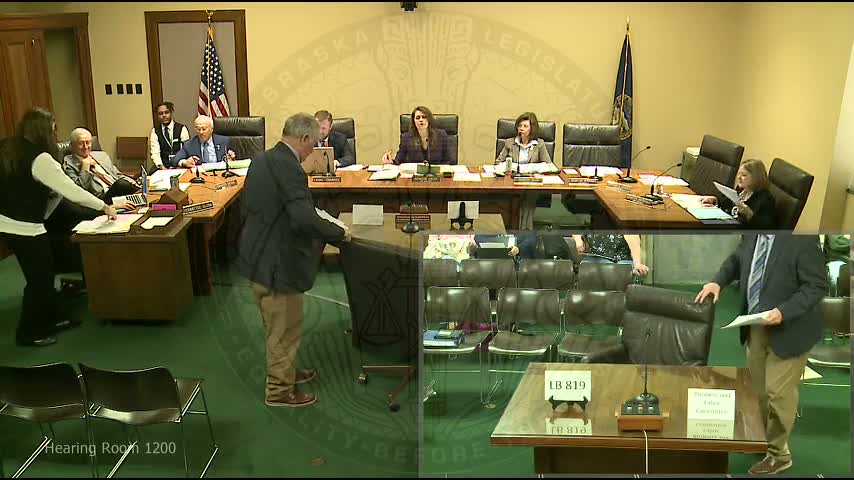
LB819 would extend sunset dates for Nebraska's rural workforce and middle‑income workforce housing programs and raise maximum unit cost thresholds; developers, bankers and nonprofits testified the programs have high leverage and are necessary to address statewide housing shortages, while some realtors expressed caution about a 10‑year sunset and funding source consolidation.
Sen. Bob Hallstrom presented LB819 to extend and modify the state's workforce housing programs, asking the committee to lengthen sunset dates for the rural workforce housing program (currently set to sunset 07/01/2027) and the middle‑income workforce housing program and to raise maximum unit cost caps to reflect rising construction prices.
Hallstrom summarized the programs’ history and funding, noting initial investments in 2018 ($7 million) and subsequent appropriations (including $12.5 million in 2022) that, with local matching, produced multiple dollars of housing investment per state dollar. He said the program had a strong return on investment and requested flexibility in valuation rules to ease development in high land‑cost markets.
Proponents across the housing and banking sectors — including Fred Hoppe (developer), Ryan McIntosh (Nebraska Bankers Association), Spark (nonprofit developer training), Nebraska Housing Resource, and the Nebraska Housing Developers Association — described the programs as crucial, highlighting revolving‑fund mechanics, local matches, and examples of completed units. Spark reported recent DED awards and local matching dollars that leveraged state funds into larger projects.
Amendment AM1921 was discussed to adjust valuation language (use cost‑to‑construct rather than appraised value) and to raise some maximums (testimony referenced raising the middle‑income maximum to $375,000). Supporters urged a sustainable funding source such as a documentary stamp tax (LB1067 discussed elsewhere) to keep these revolving funds active. Realtors testified neutral or cautious about the proposed 10‑year sunset, requesting more time to review pending policy changes.
The hearing produced extensive proponent testimony and technical questions on project eligibility, match requirements, and whether program administration should move to the Nebraska Investment Finance Agency (NYFA) or remain with the Department of Economic Development.
Next steps: Sponsor offered to work with stakeholders on sunset length and valuation language; committee closed the hearing with multiple proponent submissions recorded.