
Nebraska bill would expand health information exchange participation and tighten board oversight
Get AI-powered insights, summaries, and transcripts
Subscribe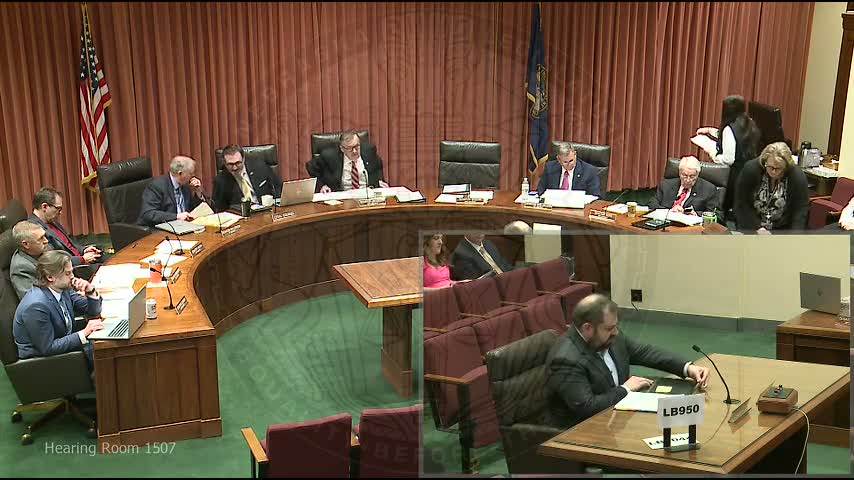
Summary
LB950 would require health care facilities and health plans to participate in the statewide Health Information Exchange, tighten board governance and limit data sharing to rule-authorized uses; proponents said the bill will improve care coordination and reduce delays while addressing privacy and rulemaking concerns.
Senator Elliot Bostar told the Banking, Commerce and Insurance Committee LB950 strengthens Nebraska's statewide Health Information Exchange (HIE), requires participation by specified health facilities and plans, and clarifies that data sharing be limited to data authorized by rules adopted by the Health Information Technology Board.
Bostar said AM1881, a white copy amendment, removes prior-authorization API requirements from the bill but preserves participation requirements and HIPAA compliance and modifies board membership to add payer representation and a critical access hospital seat. He said the amendment is a product of stakeholder compromise.
Proponents from Blue Cross Blue Shield of Nebraska, Bryan Health Connect, the Nebraska Insurance Federation, and other provider and hospital groups supported the bill. Jeremiah Blakey of Blue Cross Blue Shield credited earlier reform under LB77 with sharply reducing faxed prior-authorizations and said LB950 would build on that momentum. "The API will also allow us as health plans to respond in near real time to more prior authorization requests," Blakey said, while supporting continued discussion on API language.
Robert Bell of the Nebraska Insurance Federation supported the bill's governance changes but warned the HIT Board previously asked plans for data that exceeded its legislative scope and urged board rulemaking to follow the Administrative Procedures Act to ensure public notice and review.
Committee members asked how many waivers exist under current law, whether the bill displaces the private HIE operator Sync Health, and how the state would manage operations. Bostar and witnesses said the bill does not automatically replace existing private services and that the policy aims to improve clinical, point-of-care data exchange while preserving HIPAA protections.
The committee recorded multiple proponent letters and some opponent and neutral submissions; no final vote was taken at the hearing.