Nonprofits and legal groups warn DEI ban in LB1071 would cut services, risk federal funding
Summary
Several nonprofit coalitions, legal‑aid organizations and service providers urged the committee to remove broad DEI restrictions in LB1071, saying the language is vague, would bar many programs serving underserved groups, and may conflict with federal grant rules.
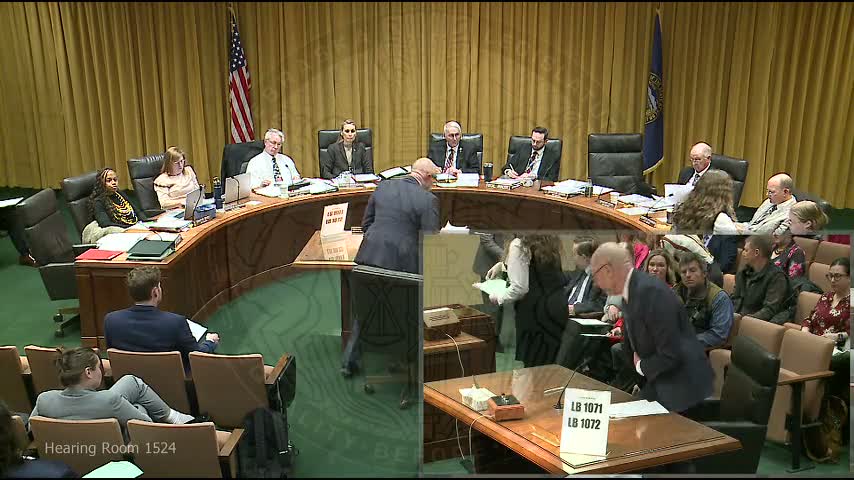
Representatives of statewide nonprofit associations, legal services groups and service providers testified in opposition to sections of LB1071 that would prohibit state funding for programs identified as advancing diversity, equity or inclusion (DEI).
Spike Eickholt of the Education Rights Council told the committee that sections 9 and 10 of LB1071 would bar appropriated money for programs that assist students with special education needs or provide legal representation tied to civil rights and federal law. "We provide direct representation to children with special needs... and that is the kind of work that section 9 and 10 would bar," he said.
Matthew Martin of the Nonprofit Association of the Midlands said many nonprofits rely on state appropriations to serve historically underrepresented populations, including immigrants, people with disabilities, and victims of domestic violence. He warned the language is broad and vague and could prompt lawsuits and the closure of services in rural areas.
Kristen McTaggart of the Nebraska Coalition to End Domestic Violence said the DEI provisions appear to conflict with federal laws that require targeted outreach to underserved populations for certain grant programs (for example the Violence Against Women Act and Victims of Crime Act). She said implementing the ban could jeopardize federal funding streams that pass through state agencies.
Witnesses urged the committee to strike or clarify the DEI language, to avoid unintended consequences for federally funded programs and for nonprofit service delivery. The committee did not amend the language at the hearing and requested additional legal analysis.