Get Full Government Meeting Transcripts, Videos, & Alerts Forever!
Get email alerts on the Alpr topic
No spam. Unsubscribe anytime.
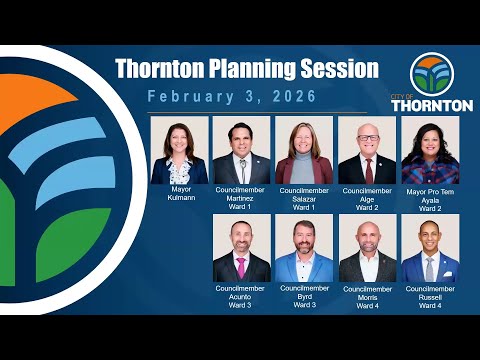
Thornton council hears police briefing on license‑plate readers and privacy safeguards
Summary
At a planning study session the Thornton Police Department detailed the department27s use of Flock automatic license‑plate readers, saying the system helps solve auto theft and missing‑person cases while staff described retention rules, audits, access controls and recent revocations of outside agency access.
Thornton Police Chief Jim Blair and Division Commander Chad Parker told the City Council at a planning study session that the department27s Flock automatic license‑plate reader (ALPR) system has become a "force multiplier" in investigations, while acknowledging resident concerns about privacy and data sharing.
"This presentation is not about whether safety and privacy are competing goals, rather it's about how they can and in fact must coexist," Chief Blair said, framing the briefing as an effort to explain how the technology is used and governed.
Commander Chad Parker described how the system operates: stationary and mobile cameras capture still images of vehicles at ingress points into the city, the software reads license plates and produces alerts when plates on law‑enforcement "hot lists" pass a camera. Parker said Flock retains image data for 30 days and that Flock has told the department the vendor cannot recover images after that period. Parker said the department does not ingest live video or use facial recognition and that only Thornton Police Department employees access the city27s Flock account.
Parker acknowledged gaps in the department27s internal tracking: a sample review of audit logs showed a low percentage of searches bearing case numbers, and council members pressed whether case numbers should be mandatory for searches. Parker said case numbers are not always available—for example when officers pursue a suspicious‑vehicle report or begin an inquiry before a case file is opened—but he agreed the department could require case numbers and that the department27s audit trail records searches indefinitely.
Councilors also asked about outside access to Thornton27s network. Parker said outside agencies must request access and an administrator must approve it; he described revoking access for agencies that selected inappropriate search reasons and specifically declined a U.S. Postal Service request. He said federal agencies cannot automatically request access to Thornton27s network under the city27s current settings and that he has revoked access when audit reviews flagged questionable behavior.
Deputy City Attorney Stevens reviewed the legal landscape for LPR use, citing Fourth Amendment jurisprudence and noting that current case law generally finds no reasonable expectation of privacy for license plates on public streets, while also noting that legislatures can impose additional limits. Stevens referenced recent Colorado bills that would tighten regulation of surveillance technologies and said the city will remain attentive to statutory changes.
Councilors praised staff for the detailed briefing and asked for follow‑up materials: a clearer public FAQ, additional audit‑review resources, and options for policy or budget changes to increase audit capacity and public transparency. Staff proposed expanding the department27s transparency portal and offering an FAQ and public question submission page to address lingering resident concerns.
The council did not take any formal policy action; members instructed staff to return with additional data, proposed audit procedures and options for community engagement.