
Care of Southeastern Michigan warns local leaders about kratom risks; Clinton Township ordinance cited
Get AI-powered insights, summaries, and transcripts
Sign Up Free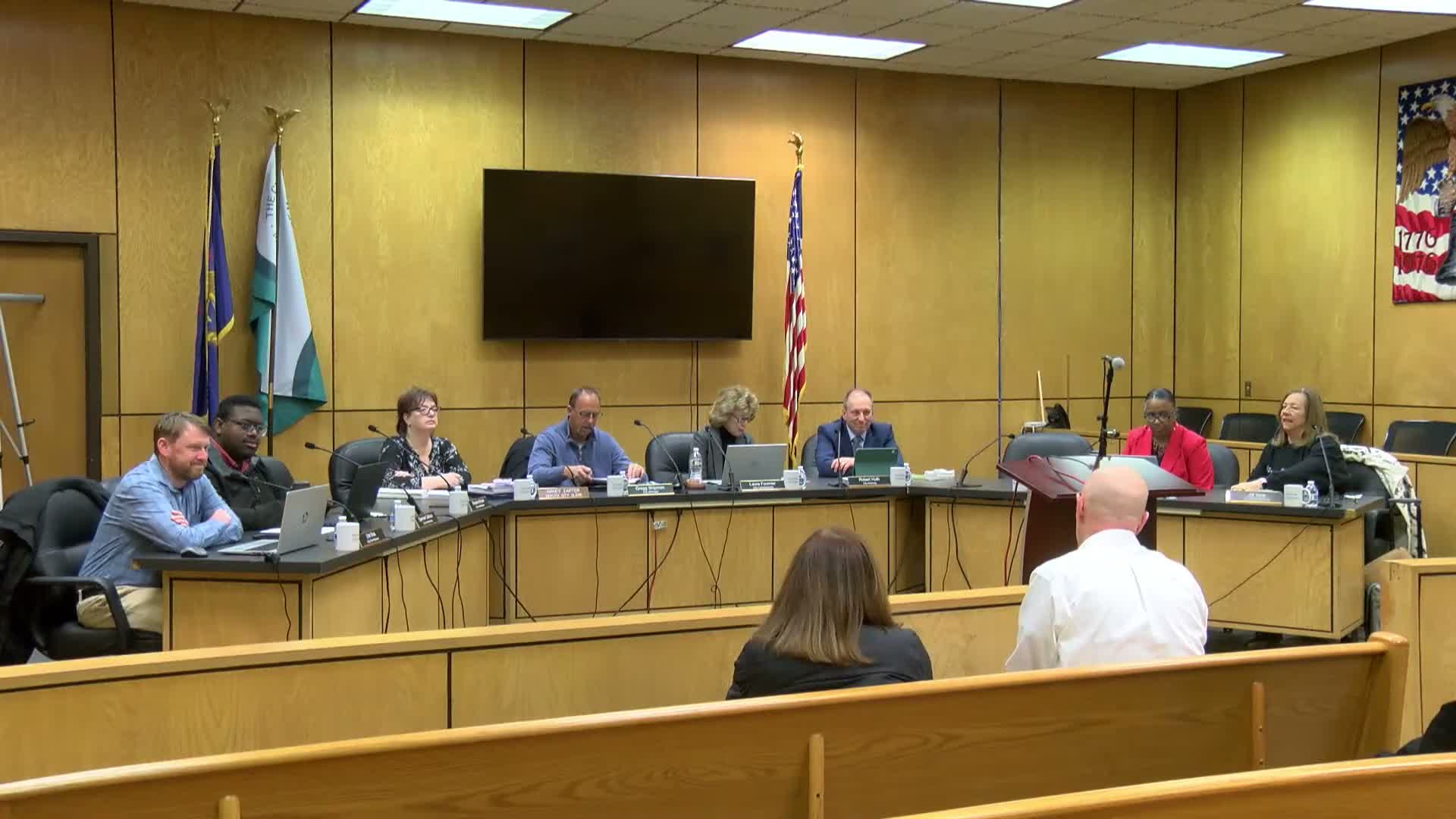
Summary
Care of Southeastern Michigan told county commissioners that kratom products — including concentrated synthetic forms — are increasingly available near youth and often lack potency labels; presenters cited a Clinton Township ordinance limiting sales to people 21+ and urged further local coordination while a related state bill, HB 4969, remains pending.
Care of Southeastern Michigan presenters told a county work session on Feb. 5 that kratom products are increasingly available in local retailers, sometimes in concentrated synthetic forms that pose higher opioid‑like potency and risk, and recommended local and state responses.
"This is approximately 13 times more potent than morphine," Lauren Lettsman, project box coordinator for Macomb County, said of a concentrated compound referenced in the presentation. The presenters said that many retail packages lack ingredient lists, potency information or clear labeling and that some displays resemble candy or energy shots, raising concerns about youth exposure.
The presenters described findings from environmental scans in Warren, Sterling Heights and Clinton Township. Sarah Blakely, who coordinates scans for local coalitions, said about 30% of retailers visited carried kratom products and roughly 20% used self‑service displays that allow customers to access products without employee assistance. "Almost no retailers had warning labels or potency information posted," she said.
The group outlined two avenues for regulation. Locally, Clinton Township adopted an ordinance (introduced Jan. 12, adopted Jan. 26) that restricts kratom sales to people 21 and older, covers synthetic derivatives, requires signage indicating age restrictions and ID checks, assigns enforcement to the Clinton Township Police Department and sets violations as a $500 civil infraction. Shannon King, a Clinton Township trustee, said the ordinance followed court‑based testing funded from opioid‑settlement dollars after people displayed opioid‑like symptoms but tested clean for opioids and were later identified as having kratom‑related problems.
At the state level, presenters cited House Bill 4969 (the "Kratom Consumers Protection Act"), introduced last September and reported out of committee in November. According to the presenters, the bill would limit purchases to adults 21 and older, require licensure through the Michigan Department of Licensing and Regulatory Affairs (LARA), mandate product testing and labeling for potency and purity, and prohibit certain synthetic derivatives — but they said the bill has seen little movement since committee action.
Presenters emphasized public‑health risks. "A high potency product . . . would hinder brain function, decision making, response time, reaction time," Lettsman said, adding anecdotal reports of withdrawal symptoms. When asked by an unnamed city attorney whether an ordinance could be circumvented by manufacturers producing synthetic variants, presenters said Clinton Township's language was drafted to include derivatives, extracts and products derived from the plant and to capture synthesized concentrates.
The presenters urged further local coordination with retailers, law enforcement and state agencies to reduce youth exposure and improve labeling and testing. Commissioners said they had questions beyond the time available and planned to compile follow‑up questions and continue discussion in a future work session. The meeting adjourned after a motion and vote.
The presentation referenced a SAMHSA 2022 usage estimate the presenters cited: "4,900,000 people reported using kratom in 2022," with 45,000 adolescents (ages 12–17) and 913,000 young adults (18–25) in that figure, and identified brands and product types encountered in local retail scans.