
Residents, court official urge Mount Clemens to act on kratom; commission plans follow-up
Get AI-powered insights, summaries, and transcripts
Sign Up Free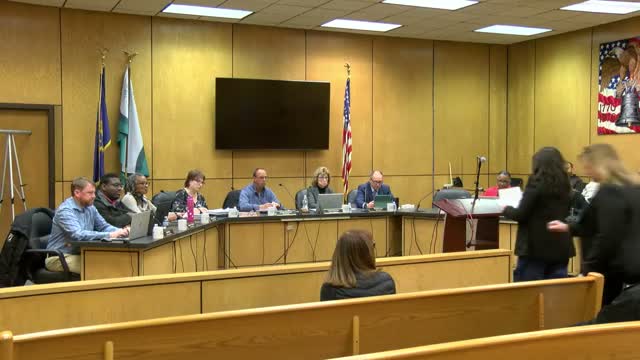
Summary
Residents and a local magistrate told the Mount Clemens City Commission that kratom is an unregulated substance harming users and urged local and county action; commissioners said they will continue work-session discussions and consider ordinance or resolution options.
Residents and a magistrate urged the Mount Clemens City Commission on Monday to pursue local action on kratom, an herbal product several speakers described as unregulated and potentially dangerous.
Carol Grant, who identified herself as living in Harrison Township, told the commission she has a family member addicted to kratom and called for local measures that could range from a resolution to a ban. Grant said she hoped local action would bolster support for state legislation, adding, "I hope it will move along lawmakers of the current House Bill 4969," and said Harrison Township Supervisor Ken Verkast is preparing a supporting resolution.
Genevieve Taylor, a magistrate with the 40th District Court who also works as a defense attorney, described encounters with people in the criminal justice system who have sought help for kratom dependence. Taylor said the substance "is a big problem that we have to resolve here in Macomb" and warned that product formulations are not standardized, calling the drug "a stimulant at a low level, but as bad as morphine at a high level." She urged municipalities and Macomb County to coordinate rather than act in isolation.
Commissioners framed the evening’s testimony as a continuation of a recent kratom work session in which Care of Southeastern Michigan and a Clinton Township trustee presented information. Several commissioners thanked speakers and said the commission will keep studying options for an ordinance or a supportive resolution at future meetings. No formal ordinance or vote on regulation occurred at the meeting.
The commission’s next steps, as stated in the meeting, will include additional education and another work session to consider whether to pursue a local ordinance, a resolution in support of state legislation, or other measures.