Get Full Government Meeting Transcripts, Videos, & Alerts Forever!
Get email alerts on the Homelessness topic
No spam. Unsubscribe anytime.
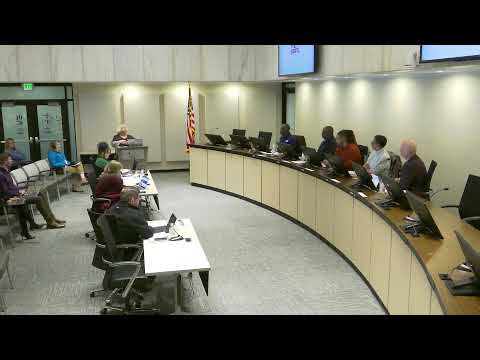
High Point task force outlines shared strategic plan, flags funding shortfall for countywide homeless services
Summary
A task‑force presenter described a jointly adopted NC‑504 Continuum of Care strategic plan and urged shared local funding to operationalize goals; current snapshots show roughly $13.6 million in federal and local investments across Guilford County and about $250,000 in local match from High Point, and staff warned permanent supportive housing is at risk under the recent NOFO.
The task force presented a regional homelessness strategic plan adopted in September 2025 and asked High Point and neighboring jurisdictions to coordinate funding and operations to implement it. Unidentified Presenter described six priority areas — governance; partnerships; performance; culture and communication; programs and initiatives; and funding — and said funding is the immediate focus as jurisdictions approach annual budgets.
The presenter said the joint NC‑504 Continuum of Care plan reflects extensive stakeholder input and aims to unify crisis intake, street outreach, family shelter capacity, capital investments and permanent supportive housing. "We do not currently provide enough funding through federal and local sources to meet the needs of the strategic plan," the presenter said, estimating an all‑in needs figure of about $13,700,000 for the community.
Why it matters: The plan would require interlocal agreements and ongoing municipal contributions to avoid duplication and maximize impact across High Point, Greensboro and Guilford County. Council members pressed staff for clearer origin and population breakdowns for people using local homeless services so contributions can be aligned with service demand and property‑tax bases.
Council members and staff discussed several methods for apportioning local contributions, including a property‑tax relative share (examples ranged from a quarter‑cent to a half‑cent levy equivalent in discussion). The presenter said existing snapshots show the city of High Point contributing about $250,000 in local match alongside federal awards (HOME, HOPWA, ESG and CDBG were cited as federal sources), and noted that Guilford County’s combined federal and local investments total roughly $13,600,000.
Staff identified immediate tactical priorities: strengthening coordinated entry and a unified crisis intake line, expanding street outreach, increasing family shelter capacity and emergency beds for single individuals, investing in capital and facility needs, and preserving or expanding permanent supportive housing stock — which the presenter warned is most at risk under the recent HUD notice of funding opportunity (NOFO).
Council members requested more granular data from the recent point‑in‑time count and operational cost estimates for the plan’s components. Debbie (staff) said the point‑in‑time count had been completed the prior week and the data were being compiled to show unsheltered versus sheltered counts and other breakdowns.
Next steps: Staff and the task force will continue analysis between now and the summer/FY26 cycle to propose a mutual‑aid or pooled funding structure and to draft interlocal agreements and allocation methodology for consideration by each jurisdiction.