Get Full Government Meeting Transcripts, Videos, & Alerts Forever!
Get email alerts on the Utilities Power Reliability topic
No spam. Unsubscribe anytime.
Duke Energy outlines fall upgrades, cites vegetation as main cause of outages
Summary
Duke Energy told Harrison City Council and residents on April 3 that installing new remote isolation devices this fall should shrink outage footprints and speed restoration; company officials said vegetation — especially dying ash trees — is the leading cause and pledged to follow up on neighborhood outage reports.
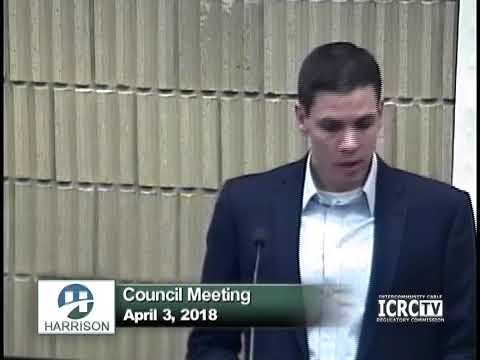
Nick Malolo, manager of the Power Quality and Reliability Group for Duke Energy covering the Ohio and Kentucky territory, told the Harrison City Council on April 3 that the utility plans to install new remote isolation devices this fall to break circuits into smaller segments and reduce the number of customers affected by single outages.
"The number 1 cause of the outages is vegetation," Malolo said, explaining that in many cases trees or branches contact lines and that Duke uses a combination of four‑year full circuit trims, five‑year line patrols and 10‑year pole inspections to find and mitigate risks. He added that the new devices will allow the system to communicate and reroute power more quickly, though residents may see brief flickers as devices perform fault isolation and reenergization.
The presentation explained other causes of outages — equipment failure, planned work and public damage — and described inspection cadences: line patrols every five years, pole inspections every 10 years, annual checks of voltage control devices and monthly substation checks required by the Public Utilities Commission of Ohio (PUCO). Malolo said crews also investigate larger events and deploy vegetation crews when imminent risk is discovered.
Residents pressed Duke about repeated outages in the Carolina Pines neighborhood, which is near the end of a circuit fed from the Wylie/Willie substation. A resident who identified himself as Paul Cox said the neighborhood frequently sees outages while nearby streets remain powered and asked the city and Duke to evaluate a tie‑in via Progress Way. "I would like it vetted that we can look at tying in the neighborhood through Progress Way," Cox said.
Lou Flores, a Duke lead planning engineer, described the planned 'self‑healing' configuration: multiple electronic devices and circuit ties that can be operated remotely and through algorithms to isolate faults, reenergize the front and back ends of a circuit, and limit outages to the smallest possible area. Flores said the project here will add several devices — "I believe there's 6 or 9 new ones that we're gonna put here on Willy," — and the company is expediting design and equipment procurement.
Duke acknowledged the Willie 54 circuit had appeared on the commission's 'worst 10%' list in the past year and said the company is accelerating upgrades; Malolo said the targeted timeframe for the detailed design, equipment procurement and installation is this fall. He also advised homeowners who see repetitive, patterned flickers at specific times to report them so Duke can deploy investigators and, if needed, record voltage with meters to diagnose service‑level issues.
On customer programs, Duke said the regulated side currently does not fund in‑home backup generators but can share information about its Smart Saver energy efficiency program and other retail business resources that may help customers reduce demand or improve resiliency.
Duke representatives repeatedly agreed to follow up: they will review specific outage dates provided by council and residents, evaluate the feasibility of the Progress Way tie‑in, and provide summary information that the council said it will post on the city's website. "So any questions you have, we'll definitely follow‑up on," Malolo said.
The company's planned upgrades, vegetation mitigation and follow‑up commitments were the central outcomes of the presentation; Duke and the council requested residents submit outage dates and contact details so the company can investigate localized issues and report back to the city.