Get Full Government Meeting Transcripts, Videos, & Alerts Forever!
Get email alerts on the Nolensville Corridor topic
No spam. Unsubscribe anytime.
Nolensville Pike corridor RFP to seek planning, NEPA and 30% design to position project for federal funding
Summary
Metro officials announced a WeGo-led RFP for Nolensville Pike corridor planning and project development — open to all firms — that will cover NEPA, alternatives analysis and 30% conceptual engineering to support an FTA Capital Investment Grant application.
Kara Koff, deputy program director for the Choose How You Move program management team, announced a planning and project-development RFP for the Nolensville Pike all-access corridor that will advance technical corridor work, alternatives analysis and NEPA documentation and produce a 30% (conceptual) design.
"This RFP opportunity, which we're calling a planning and project development RFP, initiates the technical corridor work to be aligned with that federal funding pathway," Koff said, explaining the consultant will develop purpose-and-need statements, communications and engagement plans, service‑planning support, traffic modeling and capital/operating cost estimates.
Why it matters: The RFP is intended to position Nolensville Pike for the Federal Transit Administration’s Capital Investment Grant (CIG) pipeline. Michael Briggs, deputy chief program officer in the mayor’s office, said the corridor’s scale and local context present unique challenges and will require coordination with state partners, local land-use plans and possibly zoning changes that require Metro Council action.
"We think it may be the only one in the nation where dedicated transit lanes within state right of way must be approved by TDOT and the general assembly," Briggs said, noting TDOT and the General Assembly are critical stakeholders for any design that proposes dedicated lanes in state right-of-way.
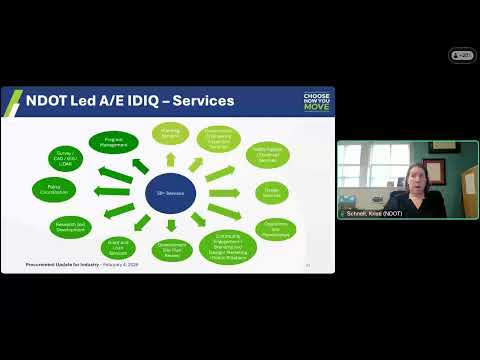
Scope and procurement notes: The Nolensville RFP will be issued through WeGo procurement and, organizers said, is open to all firms — it is not limited to firms that participate on the NDOT-led IDIQ. The RFP will include environmental review (NEPA), conceptual engineering to 30% design, cost estimating, service planning and public engagement activities. Panelists said acquisition services should be anticipated because NEPA may identify privately owned land required for right-of-way.
Schedule and next steps: Presenters said the RFP is expected to be released through WeGo in February. The panel also said they will publish FAQs and compiled responses to questions from the session; details such as specific park-and-ride locations and some transit-center designs remain to be determined and may be covered in later solicitations.
What firms should do: Teams that combine national CIG experience with local context and community engagement capacity will be competitive, panelists said; CIG experience is advantageous but not strictly required for a proposed project manager. Panelists also encouraged primes to partner with DBE and local firms; Metro and WeGo offered supplier lists and business assistance contacts to help firms form teams.