Get Full Government Meeting Transcripts, Videos, & Alerts Forever!
Get email alerts on the Safe Streets topic
No spam. Unsubscribe anytime.
Milwaukie reports rising pavement condition, outlines six‑year Safe Streets plan amid resident concerns
Summary
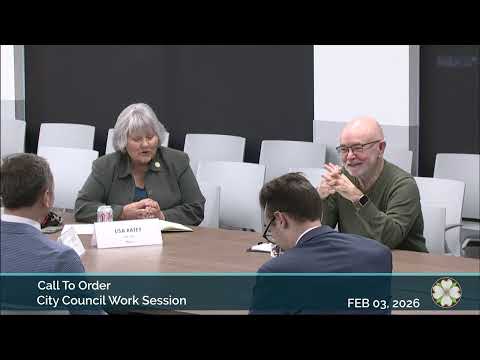
City staff told the Milwaukie council Feb. 3 that a recent data reconciliation and preservation work raised the citywide pavement condition index from about 55% to roughly 68%, and presented a six‑year prioritization plan while responding to resident complaints about berm height and slurry‑seal quality.
Milwaukie staff presented the annual update to the Safe Streets/Safe Access for Everyone and Street Service Maintenance Program at a Feb. 3 work session, reporting that a recent pavement data reconciliation and preservation projects raised the citywide pavement condition index (PCI) to about 68% from roughly 55% in 2021.
Jennifer (engineer), who led the presentation, said the program’s objective remains “to accomplish the priority 1 and 2 corridor improvements within a 20 year planning” horizon and to keep major roads at healthier PCI levels through preventive maintenance. She told council staff combined consultant and city GIS work finished in December 2025 and produced cleaner, more consistent pavement-condition data across functional classes.
City staff described the technical results: arterials showed an increase of about five points, collectors rose nearly 20%, minor collectors about 8% and local streets about 13% year‑over‑year. Staff attributed the gains to both data standardization and recent preservation work: two projects last summer (slurry seal and grind‑and‑pave work) covered roughly 4.3 miles of repairs, plus striping and markings.
Why the change matters: the council discussed how more frequent, granular PCI points make the pavement‑management curve less pessimistic than earlier five‑year snapshots. Staff noted a new capability to measure PCI at sub‑segment level, allowing targeted repairs rather than treating an entire block length as a single asset.
Projects and schedule: staff previewed a six‑year pavement plan tied to the capital improvement program (CIP) and StreetSaver field data; they said they will prioritize work using the combined dataset and community input gathered last summer and at farmers markets. Staff flagged several active projects: Washington area improvements (45 ADA ramps, ~1.2 miles of sidewalk), Ardenwald North, Harvey Street (under construction; utilities sequencing ongoing), King Road (under construction) and Jeep Road (construction started Dec. 2025; expected complete fall 2026 and including 67 ADA ramps and 2.85 miles of roadway).
Resident concerns and contractor quality: council members relayed complaints about asphalt berm height in some neighborhoods and inconsistent slurry‑seal results on streets such as 30th Street. One council member reported neighbors saying the slurry appeared “speckled” and suggested late‑day placement and premature reopening as contributing factors. Staff acknowledged the complaints, said some contractors work under joint solicitations that span multiple cities, and said the city is considering running its own solicitation (or running its own solicitation and inviting partner cities) to gain quality control and specification enforcement.
Construction safety and enforcement: staff reported motorists speeding through active work zones and said the Milwaukie Police Department increased enforcement presence on King Road; staff said they reduced the posted construction speed to 25 mph and will pursue temporary traffic regulation and double‑fine postings if unsafe driving continues.
Outreach and metrics: staff said they plan improved resident notification about upcoming work (biweekly email updates, website postings and handouts for shared‑road projects) and will maintain a public spreadsheet showing spot‑project proposals and status. They reported 22 spot proposals submitted in 2025, five awards, seven applications under review, and ongoing interest in temporary radar speed signs.
What’s next: staff will finalize the six‑year paving plan tied to the CIP, continue community outreach, and return with budget and contract recommendations as part of the biennial process. The presentation closed with council direction to refine metrics and keep residents informed as projects move into construction.
This account is based on staff presentations and council discussion at the Feb. 3 Milwaukie work session.