Get Full Government Meeting Transcripts, Videos, & Alerts Forever!
Get email alerts on the Budget General Assistance topic
No spam. Unsubscribe anytime.
Story County reviews general assistance budget; staff propose manual changes and seek opioid funds for transportation
Summary
At a Feb. 2 work session, Erin Rewertz, Story County general assistance director, proposed raising the applicant resource limit to $250, shortening residency and job‑loss eligibility windows, and requested reestimates for postage, communications and transportation; supervisors asked staff to check whether opioid grant funds and countywide allocations can cover some costs.
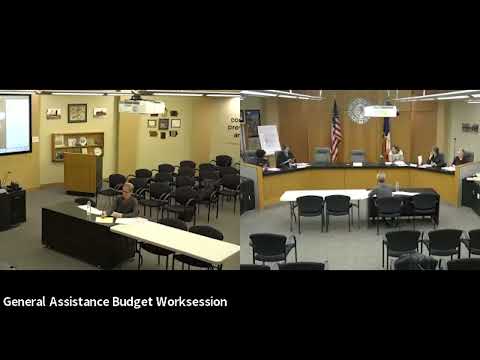
Story County supervisors met Feb. 2 for a budget work session on general assistance, where Erin Rewertz, general assistance director, outlined several proposed program‑manual changes and line‑item reestimates that could affect rent and transportation spending.
Rewertz told the board she plans to update the GA manual, post required public notice and make the changes effective July 1; she asked to increase the office‑supplies reestimate to cover roughly $500 in publication costs. She also flagged a long‑running postage issue, saying the county is tied to “a five‑year contract for a postage meter and have lost all the sharing,” which has left the GA program paying the full lease and prompted a request for a postage reestimate and outreach to the county attorney’s office to explore a buyout or other solution.
The proposed manual changes center on eligibility. “We have a current resource limit of $150, and I’m looking to raise that to 250,” Rewertz said, adding she compared contiguous and similar‑size counties when drafting the proposal. She also recommended reducing the residency requirement from six months to 30 days to demonstrate a clear intent to remain in Story County, and shortening the waiting period after job loss from 90 days to 60 days. Rewertz cautioned these changes could increase demand for rent assistance; she said GA’s three‑year average for rent was about $52,000.
Staff also raised several line‑item adjustments. Rewertz said communication costs tied to Teams phones prompted lowering the communications line to $1,500 while updating per‑item projections from $12.50 to $17.50. On attorney fees she reported she has not yet received bills this fiscal year and named Chad Schneider (who often handles matters pro bono) and Brian Barker (appointed counsel) as attorneys who have historically billed the program.
The group discussed a newly billed county charge for CSN, a shared case‑management system. Rewertz said regions previously paid CSN dues but the vendor has begun invoicing counties; she said the vendor’s letter proposes “a flat fee of 2,500 per county” and that the fee does not limit the number of users. Supervisors debated whether the $2,500 should remain in the GA budget, where several of the system’s users sit, or be moved to a countywide dues account so it can be distributed across departments.
Transportation for substance use treatment and court‑ordered commitments is already over budget, Rewertz said, driven largely by a small number of clients who cycle between hospital and treatment. She estimated typical transport costs “anywhere from 200 to $400, and most of them are 300 to $400,” and said she has already exceeded the current reestimate. An attendee citing the opioid grant documentation noted Exhibit E permits some transportation uses; “We can provide transportation with opioid funds,” the attendee stated. Supervisors asked staff to verify eligibility rules and said they would consider creating a dedicated opioid‑fund placeholder line or moving $4,000 of the current line to a separate transportation line if allowed.
Supervisors emphasized process caution for any grant reallocation. They asked staff to confirm documentation requirements for opioid funds and to coordinate with the county auditor’s office on where to record the CSN dues. Rewertz said she would provide the additional information needed to finalize reestimates and manual language.
The work session closed with agreement on follow‑up items: county attorney review of the postage contract, a determination of whether opioid funds may be used for the transportation line, and a decision on whether CSN dues should remain in the GA budget or be accounted for countywide. No formal votes were taken during the session.