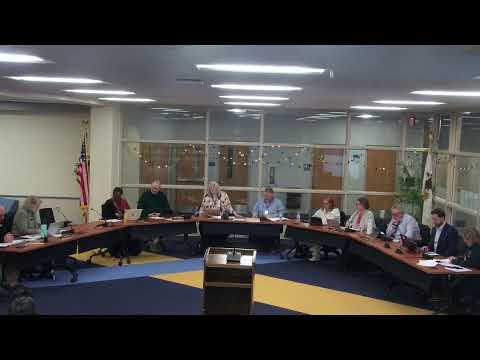
Warren Township HSD 121 reviews midyear 'stoplight' report, board urges targeted action for freshmen
Loading...
Summary
Superintendent Dr. Wiesman told the Board of Education of Warren Township High School District 121 that overall freshmen-on-track rates improved but Hispanic/Latino and Black/African American students remain disproportionately off track; the board asked staff for subgroup data and concrete intervention steps.
At its Jan. 20 meeting, the Board of Education of Warren Township High School District 121 heard a midyear "stoplight" report from Superintendent Dr. Wiesman that showed modest districtwide improvement for freshmen but persistent disparities among student groups.
"We have seen an increase in the Freshmen on Track rate for all of our students, but a higher increase for our Black or African American students and our Hispanic or Latino students," Dr. Wiesman said, adding that subgroup-level performance remains below the district target. He told the board the stoplight report is intended as a transparency tool and that red flags indicate areas where the district is not meeting stated goals.
Board members pressed for more granular analysis. One board member asked whether the district had compared incoming reading scores for underperforming groups; Dr. Wiesman said staff would seek that information and indicated the district would track whether students who start farther behind are less likely to be caught up.
Dr. Wiesman provided approximate subgroup proportions for freshmen who are off track, saying "about 55–60% of our freshmen who are off track are Hispanic or Latino" and "about 22% ... are Black or African American," and characterized those figures as approximate. Board members requested the staff to supply the board with subgroup names, the underlying data and suggested next steps so that interventions could be tailored.
The board also discussed restorative practices, including "repair conferences." A board member noted that repair conferences "only work if everybody's there of their own volition," and Dr. Wiesman said staff hear some adult skepticism that repaired relationships are treated as a way to avoid consequences; he described work to balance accountability with restorative approaches.
School leaders said the district will continue to monitor interventions (including lunchtime intervention efforts) and that administrators will report back with more detailed subgroup breakdowns and action plans. Dr. Wiesman encouraged the board to follow a scheduled partial-day retreat to review failure-rate data and intervention impacts.
The discussion closed with the board asking staff to return subgroup-specific analyses and to describe the interventions' measured impact before finalizing next-year priorities.