
League urges members to restore $500,000 cut to local technical assistance programs
Get AI-powered insights, summaries, and transcripts
Sign Up Free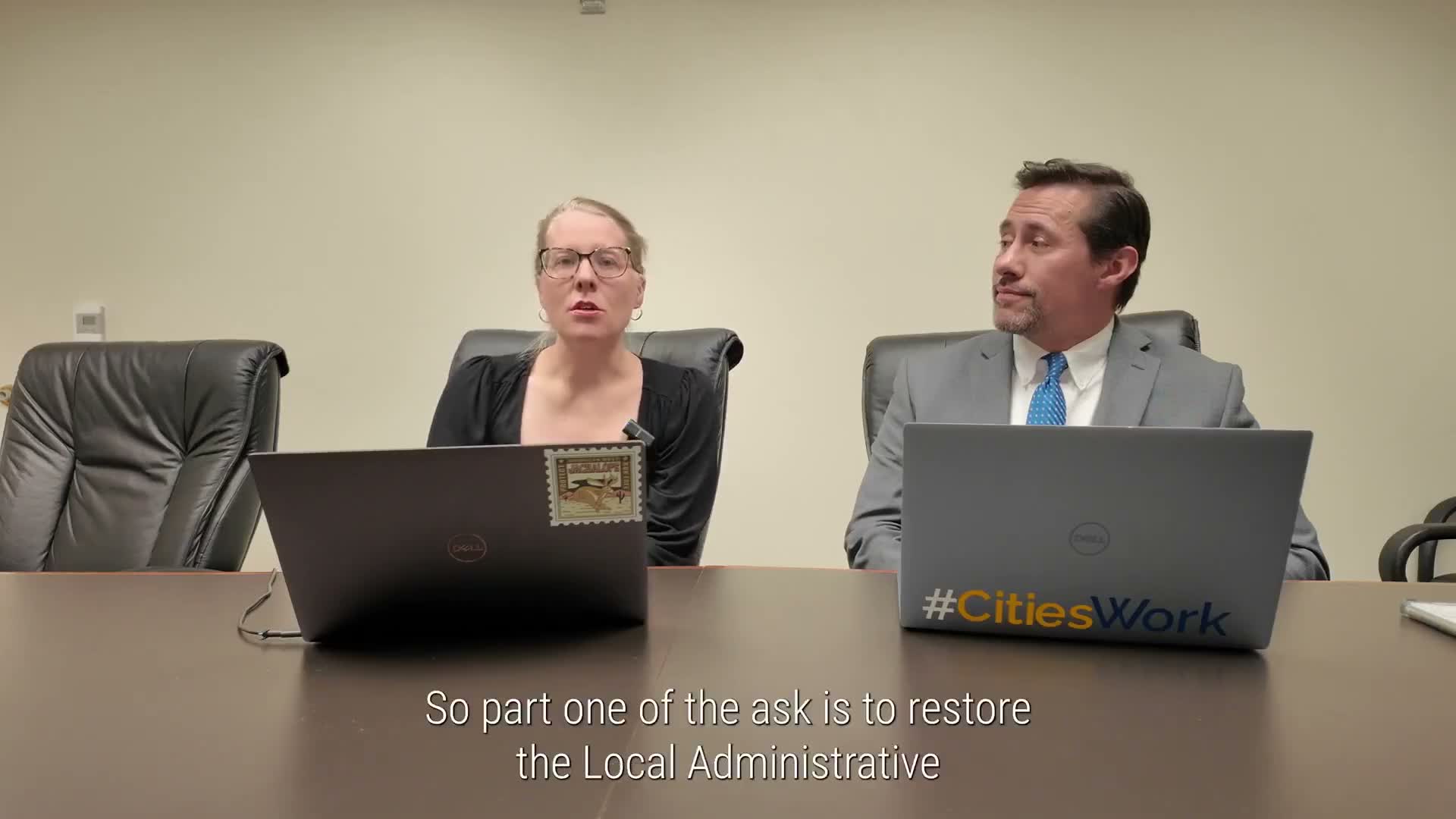
Summary
The Utah League of Cities and Towns asked members to press lawmakers to restore a $500,000 cut to the Local Administrative Advisor program and to oppose further reductions to a consolidated technical‑assistance grant that could remove about $241,000, League staff said at a post‑LPC recap.
The Utah League of Cities and Towns urged members to press legislators to restore funding for local technical assistance after last year’s mid‑session reduction stripped $500,000 from the Local Administrative Advisor (LAA) program, League staff said at a week‑3 post‑LPC recap.
"One is to restore the $500,000 that was taken away from the LAA program," said Molly Wheeler, speaking after the meeting’s opening remarks. Wheeler said that last‑minute cuts removed the League’s portion of the grant and also reduced funding to each Association of Governments by about 10 percent.
Wheeler described a separate, related risk tied to a broader budget exercise. State budget staff ran a scenario of a 5 percent cut and consolidated several technical‑assistance programs into a single consolidated community advisor grant. She said that consolidated grant faces a possible $241,000 reduction, and that cut could affect programs beyond LAA — including Technical Planning Assistance (TPA) and a program referred to in the meeting as RPP.
"When GOPB went through that exercise they realized... they would also likely have to cut some of the technical assistance," Wheeler said, referring to the Governor’s Office of Planning and Budget (GOPB).
League leaders asked members who represent impacted municipalities or who participate in the LAA network to respond to a forthcoming email with targeted asks and to contact the legislators listed (representatives and senators on the general government appropriations subcommittee). The League said it will include contact information in a nightly email and follow up with communities directly.
League organizers framed this as an operational issue for local governments: technical‑assistance programs provide planning, asset management and infrastructure support that many municipalities — and some larger communities that do not participate in LAA — rely on. Wheeler urged members to help restore the program to full capacity so it can continue operating.
No formal motion or vote occurred during the recap; the session closed with organizers promising to circulate more information and next steps by email.