Get Full Government Meeting Transcripts, Videos, & Alerts Forever!
Get email alerts on the Wssc Budget topic
No spam. Unsubscribe anytime.
WSSC Water outlines FY27 budget and two rate scenarios; Montgomery council members favor 6%
Summary
WSSC Water presented two FY27 rate scenarios — a 6% base case and a 7% alternative — detailing a $759.3 million capital program, recent infrastructure failures and expanded customer-assistance proposals; county members signaled support for the lower 6% path while staff coordinate with Prince George’s County for a joint limit.
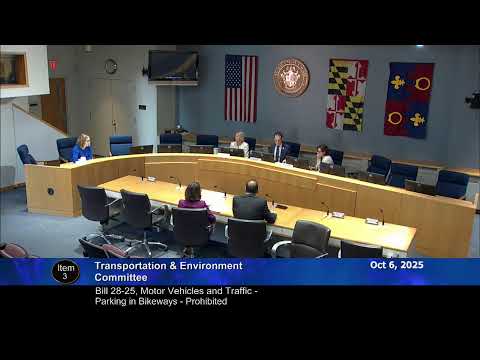
WSSC Water officials briefed the Montgomery County Transportation & Environment Committee on Oct. 6 about proposed FY27 budget scenarios and capital priorities, presenting a base 6% rate increase and a 7% alternative that includes additional reserves and PAYGO.
The WSSC General Manager and CEO, Keisha Powell, told the committee, “WSSC Water has proposed a balanced budget based on the costs we know at this time.” Powell said staff reduced discretionary spending and identified about $27,000,000 in operating savings (about 8% versus the prior approved budget) and proposed no new headcount in the FY27 package.
Chief Engineer Alan Wong summarized the capital improvement program at roughly $759,300,000. He described three components: projects already in progress (219 projects totaling about $231,000,000), projects launching in 2027 (88 projects noted in presentation materials), and an approximately $300,000,000 bucket for other initiatives, including lead reduction, PFAS remediation, Blue Plains master planning and developer projects. Wong highlighted targeted FY27 investments including roughly $9,500,000 for large-diameter water main replacement and about $8,700,000 for critical wastewater collection work.
CFO Anat Timothy Musar described the two scenarios as working drafts and identified major cost drivers: debt service ($388,400,000, up roughly $14,000,000 from FY26), regional sewage disposal (+$6,000,000), and higher energy costs (+$2,700,000). Musar said the 7% scenario adds roughly $5,000,000 in PAYGO to reduce debt-service principal payments and about $5.6 million in a relief fund to mitigate liquidity risks (including growing delinquencies). Earlier in the briefing Mr. Levchenko summarized the incremental 1% revenue as about $10,500,000, with WSSC recommending roughly half of that for additional PAYGO and half as a cash reserve.
Powell and Musar also outlined customer assistance measures and workforce-related cost pressures. Powell described recent operational risks — including multiple power outages at the Potomac plant and a near-loss of raw water pumping capacity — as reasons to invest in electric resiliency and system reliability. Musar said recent health-plan network changes (she cited carrier withdrawals from networks) are driving significant healthcare-premium increases for staff, which the utility has to plan for (Musar cited premium increases in the high teens to low twenties percent range this year).
Council members said they understood the need to protect system reliability but expressed concern about household affordability. One councilmember said she was “much more comfortable with the 6% level” as a balance between rate relief for customers and the utility’s need to fund capital. Staff said they will continue coordination with Prince George’s County with a goal of converging on a single set of spending limits by the end of October; WSSC plans to publish a preliminary proposed budget in January that will be released for public hearing.
Next steps: county staff will continue interjurisdictional coordination with Prince George’s County, clarify outstanding packet details (including fine or fee clarifications raised later in the meeting), and return with a more developed FY27 proposal in January for public comment.