Get Full Government Meeting Transcripts, Videos, & Alerts Forever!
CSB: Failures in hazard recognition, dust control and leadership led to 2017 Didion Milling explosions; NFPA updated guidance, OSHA still urged to act
Summary
A U.S. Chemical Safety Board investigation found that a May 31, 2017 combustible‑dust explosion at Didion Milling in Cambria, Wisconsin, was driven by poor hazard recognition, inadequate fugitive dust management, missing dust hazard analyses and weak safety leadership; the CSB recommended NFPA update guidance (resulting in NFPA 660) and again urged OSHA to adopt a comprehensive combustible‑dust standard.
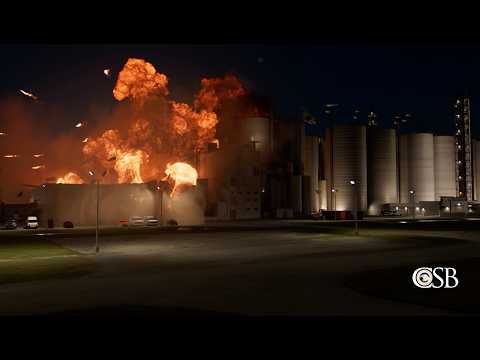
On May 31, 2017, a combustible‑dust incident at Didion Milling’s dry corn mill in Cambria, Wisconsin, escalated from a smoldering nest inside grinding equipment to a series of internal and secondary explosions that destroyed the facility and killed five workers, according to a U.S. Chemical Safety Board report presented in the transcript.
The CSB investigation identified 13 safety issues that converged to cause the catastrophe. Key findings included poor process hazard recognition (materials and some finished products were of a particle size that qualified as combustible dust), a lack of dust hazard analyses (DHAs), inadequate management of fugitive dust and deficient process safety leadership that had normalized smoldering events and minor upsets over several years.
"These factors led to a catastrophic incident that could have been prevented," said Speaker 2 (Unidentified Speaker) in the CSB briefing, summarizing the board’s conclusion that multiple…
Already have an account? Log in
Subscribe to keep reading
Unlock the rest of this article — and every article on Citizen Portal.
- Unlimited articles
- AI-powered breakdowns of topics, speakers, decisions, and budgets
- Instant alerts when your location has a new meeting
- Follow topics and more locations
- 1,000 AI Insights / month, plus AI Chat