Get Full Government Meeting Transcripts, Videos, & Alerts Forever!
Get email alerts on the Housing Cdbg topic
No spam. Unsubscribe anytime.
Lapeer commission approves $826,000 CDBG application for Opera House apartments
Summary
The Lapeer City Commission voted unanimously Feb. 2 to authorize submission of an $826,000 My Neighborhood CDBG application to rehabilitate the Lapeer Opera House’s second floor into seven apartments (51% initially income‑restricted for five years) and to pursue related historic preservation work on upper floors.
The Lapeer City Commission voted unanimously Feb. 2 to authorize the city’s Housing Improvement Department to submit an $826,000 application to the Michigan State Housing Development Authority’s My Neighborhood Community Development Block Grant (CDBG) program for rehabilitation of the Lapeer Opera House.
The proposal described by the applicant would renovate the second floor to create seven apartments (five one‑bedroom and two two‑bedroom units) and later rehabilitate the third‑floor opera space as an event venue. Applicant Tom LaMagna said the project includes fire suppression, upgraded utilities and historically sympathetic exterior work. He described the third floor as a restored opera house with a 20‑foot ceiling that would serve as “a wedding venue” with a capacity of about 130 people.
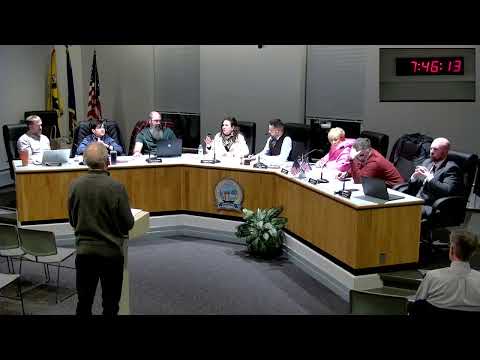
Several residents spoke during the public hearing, raising questions about affordability and TIF financing. Jacob Leroy said he opposed the grant, telling commissioners, “I don’t think we need it. It’s gonna require, 51% of the 7 apartments be low income. That would be 4 out of the 7.” Resident Casey Carpenter urged use of TIF as bridge financing to revitalize downtown, while Wes Weber thanked staff for outreach but warned about repeatedly limiting new downtown housing to lower incomes.
City staff clarified how the CDBG income rules work. Shelley, a city housing staffer, said eligibility is tied to area median income (AMI) caps and that the program the applicant cited requires households to meet up to 80% AMI; she reiterated the specific dollar examples provided: a single‑person household qualifying at roughly $56,600 and a two‑person household roughly $64,650 as 80% AMI benchmarks used in the packet. She also explained that the CDBG requirement is that 51% of units must initially meet the income limits and that verification is required for the first household occupying a unit; the income restrictions and rent monitoring remain in place for five years.
Commissioners’ questions focused on the unit mix, which units would count toward the 51% requirement, whether relocation assistance would be needed (staff said none was expected but guidelines must be in place), how rents would be set (owners set rents but they must be at or below fair‑market rents consistent with program rules), and how long income verification would be enforced. LaMagna said final unit assignments for the 51% requirement had not been fixed and that rents would target Lapeer County fair‑market rents.
After discussion the commission moved to adopt the resolution authorizing the Housing Improvement Department to submit the $826,000 My Neighborhood CDBG application and to authorize the mayor to sign necessary documents; the motion passed on a unanimous roll call vote.
Next steps: staff will submit the application to the Michigan State Housing Development Authority and return to the commission with any grant award details, project agreements and required local administration procedures if funding is awarded.