
Residents, lawyer warn Giles County commission about marketed subdivision, deposits and environmental risks
Get AI-powered insights, summaries, and transcripts
Subscribe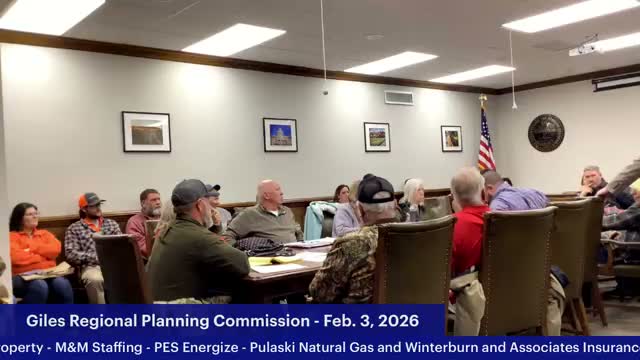
Summary
Public commenters and a lawyer told the Giles County Regional Planning Commission that a marketed subdivision (referred to in the meeting as Rio Ranch or Korean Range) is being advertised and sold without plats or plans, raising possible consumer-protection liability and environmental concerns tied to karst geology and the aquifer.
Dustin Hill, an attorney who said his firm represents Giles County residents, told the Giles County Regional Planning Commission that a developer marketing a proposed subdivision has been taking deposits while failing to file required plans and plats with the commission.
"They're pitching this. They're taking deposits on this," Hill said, adding that eight months had passed with no formal plans submitted for review. He warned that continued marketing without filings could create county liability if buyers later seek refunds or allege they were misled.
Hill also raised environmental concerns, saying the property includes karst limestone terrain that could transmit contaminants and that increased wells and runoff from a large subdivision could harm the local aquifer. "When you look at this potential development...you could take a dropper of red dye and you could put it in a spring that's coming out of the ground, and that might show up 10 miles away," he said.
Commissioners and other residents described marketing practices they said were already causing confusion: plots marked as "sold" or "reserved," nonrefundable deposits that may be transferable to other projects, and marketing images that appear to show neighboring owners' property. Todd Van Buren said attendees had seen plots marked as sold and described completed transactions that lacked recorded plats.
The commission's chair cautioned that the regional planning commission's formal jurisdiction is limited. He said the commission's role is mainly to determine whether a proposal qualifies as a subdivision (for example, whether it includes internal public roads) and that other issues such as well drilling and water regulation fall under state agencies. To reflect state practice, the commission noted that water and well regulation is handled by the Tennessee Department of Environment and Conservation.
Hill said his firm would deliver a written notice with the legal arguments and supporting case law within about two weeks to outline the county's options for responding. Commissioners accepted the offer to convene further legal discussion: they proposed a working-group meeting with the county attorney and the developer's counsel to explore next steps.
The commission did not take formal enforcement action at the meeting. Commissioners asked staff and counsel to coordinate schedules and to consider whether short updates from the county attorney or other officials could appear on a future agenda.
The meeting record contains public comments urging vigilance and consumer protection; the commission will consider the legal notice and whether additional administrative or legal steps are appropriate at a future session.