
Dozens of residents urge Palm Beach County to pause reinvestment of maturing Israel bonds
Get AI-powered insights, summaries, and transcripts
Sign Up Free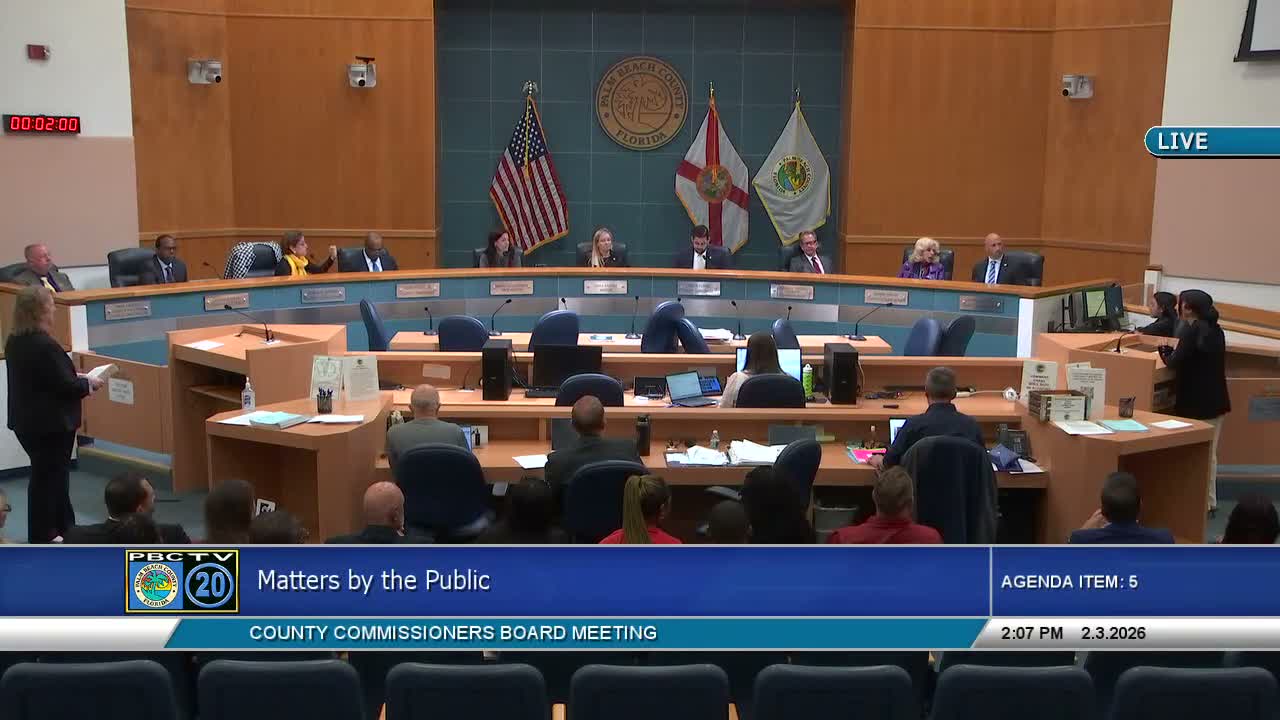
Summary
Multiple public commenters at the Palm Beach County commission meeting urged the board to stop reinvesting maturing Israel bonds (which they said total about $1 billion), called for legal review of the county investment policy, and criticized perceived ethical implications; county leaders defended the investments as state‑authorized instruments that have produced higher interest income.
Dozens of residents used the county’s public‑comment period to demand that commissioners stop reinvesting maturing Israel bonds and to ask for a legal review of the county’s investment policy.
Speakers said Palm Beach County’s Israel‑bond portfolio had grown to roughly $1 billion and argued that reinvestment ties county tax receipts to an active armed conflict and alleged human‑rights violations. Several callers asked the board to refrain from reinvesting the March 1 bond maturities and to redirect proceeds to local priorities such as education, housing and health care. Some speakers cited limits in the county’s investment policy (percent thresholds for sovereign‑bond exposure) and alleged those limits had been increased and exceeded over time.
Administrator Abruzzo and Commissioner Weiss responded in public by noting the county’s broader investment constraints. Abruzzo said investments in Israel bonds historically produced higher yield for the county’s reserved and liquidity funds and that, at the time he spoke, the Israel‑bond portfolio returned about $35 million a year compared with $27 million previously from the rest of the portfolio. Weiss, a member of the county’s investment policy committee, said the county’s options for safe instruments are limited and that Israel bonds were statutorily authorized and outperformed available bank instruments; he also said quarterly reviews had not shown policy violations. The administration said many funds invested are restricted to particular purposes and cannot be repurposed for general spending.
Speakers included veterans, religious‑community members, students and organizers; their requests ranged from pausing future reinvestments to reconfiguring the investment‑policy percentage cap. Commissioners did not vote on investment policy at the meeting but took public comment and asked staff and the clerk’s office to provide more detail about the portfolio and cash‑flow limitations.