
Palm Beach County approves tiny‑home pilot using opioid‑settlement interest for transitional housing
Get AI-powered insights, summaries, and transcripts
Subscribe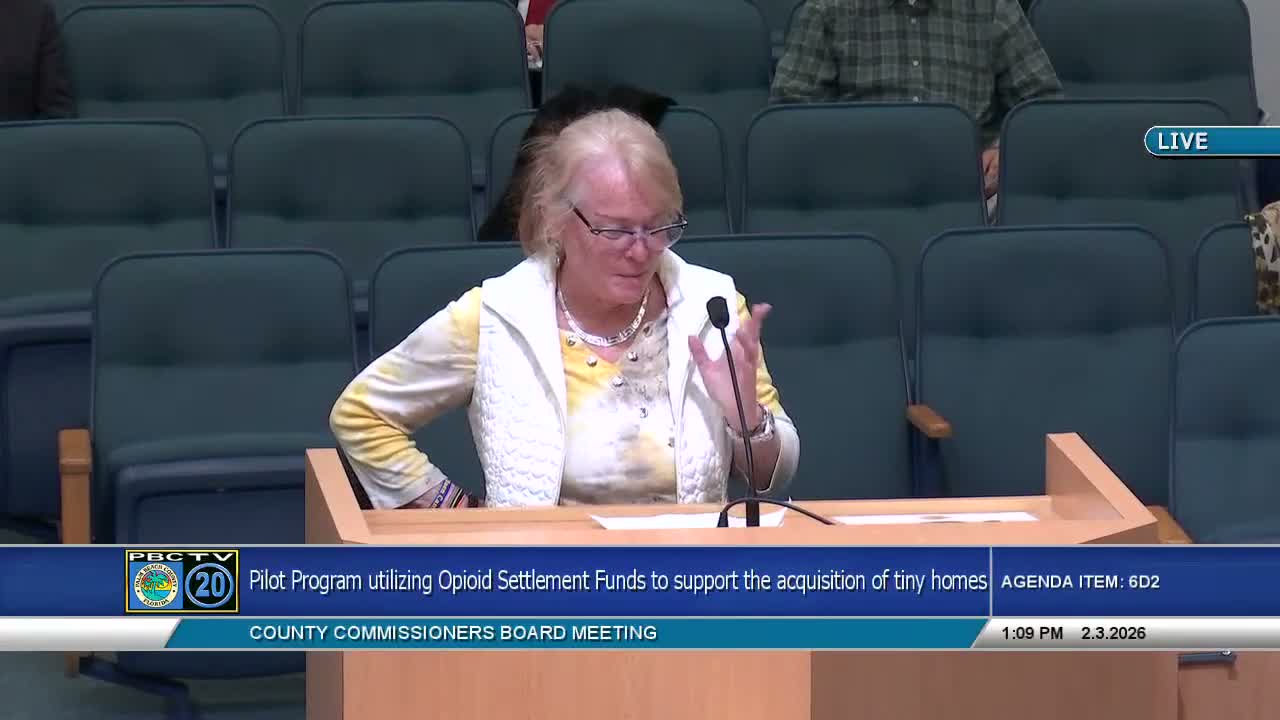
Summary
The Palm Beach County Commission approved a pilot to use up to $500,000 of interest from opioid‑settlement funds to buy tiny homes (capped at $100,000 per unit) for transitional housing on nonprofit treatment‑provider land, with reporting and clawback provisions required.
Palm Beach County commissioners on Tuesday approved a pilot program to purchase tiny homes as transitional housing for people with substance‑use disorders, financed with interest earned on the county’s opioid‑settlement funds.
Staff told the board the program would use up to $500,000 of accrued interest (the county has roughly $3.78 million in interest accrued for housing uses) to acquire scattered‑site tiny‑home units on land owned or controlled by qualified nonprofit treatment providers. Dr. James Green of Community Services said the county would cap capital spending at $100,000 per unit and require nonprofits to operate and manage housing, secure site approvals, cover redevelopment and operating costs, provide wraparound services and accept referrals from the Homeless and Housing Alliance and the county behavioral‑health system.
The county emphasized the funding is interest on opioid‑settlement dollars, not principal, and must be used for opioid‑specific prevention, treatment, recovery and harm‑reduction purposes. Commissioner Weiss asked whether tenants could remain up to two years and whether contracts would include clawback provisions if providers fail to meet obligations; staff confirmed both oversight measures would be included in standard agreements. Staff also said the county’s investment would be limited to capital costs; operations and redevelopment costs are the nonprofits’ responsibility.
Supporters from the recovery community spoke during public comment, urging clear statutory compliance, measurable outcomes and that programs follow recovery‑residence standards. Sharon Burns Carter, who serves on several local recovery boards, told commissioners the master plan calls for licensed clinical services and that housing alone is “not recovery.” Maureen Killian, who identified herself as a person with lived experience, stressed transparency and advisory‑board input on how opioid funds are deployed.
Commissioner Maria Sachs framed the pilot as a step to extend treatment beyond discharge, saying tiny homes adjacent to treatment centers would provide continuity of care. The board approved the items as presented, with a recorded vote of 7–0. Staff said they will return with program data and recommended next steps after the pilot.