UN Secretary‑General António Guterres urges immediate humanitarian access to Gaza, reaffirms two‑state solution
Loading...
Summary
UN Secretary‑General António Guterres told a UN committee that 2026 is a pivotal year for Israeli‑Palestinian peace, called for rapid humanitarian access to Gaza via the Rafah Crossing, defended UNRWA's immunity and warned that settlement expansion and large new housing tenders in the West Bank threaten a two‑state outcome.
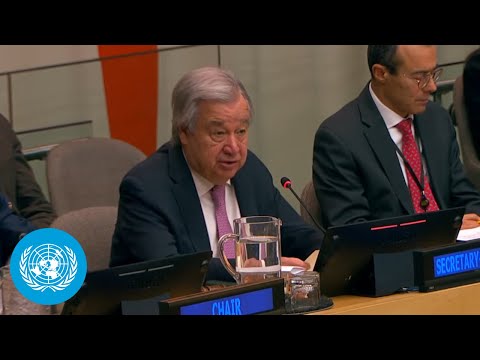
Secretary‑General António Guterres told a United Nations committee that "we enter 2026 with the clock ticking louder than ever" and urged swift, large‑scale humanitarian access to Gaza while reaffirming a two‑state solution as the only viable path to lasting peace.
Guterres, speaking at the committee, said Palestinians in Gaza continue to endure "grave suffering" and noted that "more than 500 Palestinians have been killed" since the October agreement. He called on all parties to "implement the agreement in full, exercise maximum restraint, and comply with international law and UN resolutions," and demanded "rapid and unimpeded passage of humanitarian relief at scale, including through the Rafa Crossing." (António Guterres, Secretary‑General of the United Nations)
The secretary‑general criticized recent suspensions of international nongovernmental organizations that provide aid, saying such actions "defy humanitarian principles" and worsen civilian suffering. He listed basic needs — shelter, food and education materials — that must reach those affected.
Guterres also warned that in the occupied West Bank "more than 37,000 Palestinians were displaced in the West Bank in 2025 alone" and said a recently published Israeli tender for "3,401 housing units in the E1 area" would, if carried out, "sever the Northern and Southern West Bank" and undermine the viability of a two‑state solution.
Citing the International Court of Justice and a recent report by the Office of the High Commissioner for Human Rights, Guterres described some actions as destabilizing and unlawful and said that the OHCHR report documented discriminatory administration of the West Bank with "evidence based findings on entrenched racial discrimination." He urged member states to "significantly step up on every front," including support for the 2026 flash appeal for the occupied Palestinian territory.
Guterres reaffirmed his full support for the UN Relief and Works Agency (UNRWA), condemned Israeli parliamentary laws that he said impede the agency's work, and strongly condemned demolitions and public threats against its staff. He stated that certain premises are United Nations premises and underscored that UNRWA personnel "owe the privilege and immunity specified in the 1946 convention on the privileges and immunities of the United Nations," while reminding states of obligations under Article 105 of the UN Charter. (António Guterres)
The statement closed with a restatement that "there is only one viable route, the two‑state solution in line with international law and relevant United Nations resolutions," describing Palestine as a contiguous, sovereign state with Gaza as an integral part and Jerusalem as the capital of both states. Guterres concluded by urging the international community to act with "clarity, unity, and determination." The committee thanked the secretary‑general for his remarks; no votes or formal actions were recorded in the session.