Get Full Government Meeting Transcripts, Videos, & Alerts Forever!
Get email alerts on the Parking topic
No spam. Unsubscribe anytime.
Oxford officials review downtown wayfinding plan and consider parking limits, enforcement
Summary
City staff presented a downtown wayfinding and parking plan recommending consolidated, decorative signage, differentiated short-term parking (15–30 minutes) near key spots, and gradual implementation rather than immediate meters or garages. Neighbors raised residential parking concerns near an assisted-living facility.
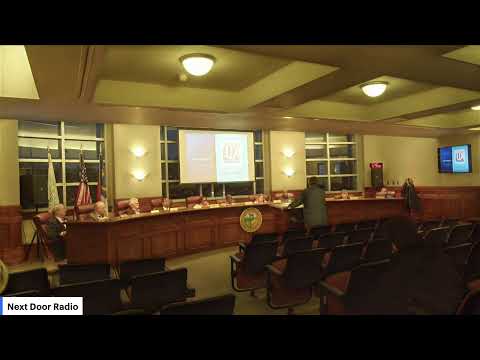
City staff presented a downtown wayfinding and parking plan on Feb. 5 that would add consolidated, styled signage pointing drivers to municipal, county and other parking lots and set differentiated time limits for on-street spaces.
An unidentified presenter told the commission that parking garages are currently prohibitively expensive — saying a garage could cost "dollars 3,000,000" for roughly 150 spaces — and recommended against immediate metering. "We're not gonna be recommending parking meters at this time," the presenter said, adding that the plan should be phased in gradually to avoid imposing new fees on downtown visitors.
The staff proposal identifies three standard time limits: 2-hour spaces for most Main Street stalls, 30-minute spots near restaurants that rely on quick pickup, and 15-minute spaces for locations such as the post office. The presenter said the signs would include posted hours (for example ending at 5 p.m.) so short-term limits would not necessarily apply during evenings or weekends.
Staff outlined a public-engagement timeline: distribute the plan for public comment in March–May with a public hearing and install signs afterward, then begin enforcement once signage is in place. A preliminary signage cost range was discussed during the meeting; staff offered a high-level estimate for the full program and said enforcement could be handled by existing staff or by a small part-time enforcement team.
Commissioners favored decorative brown signage and cautioned against crowding signs with too many destinations. One commissioner recommended adding a QR code at the bottom of signs so drivers could access a downtown map and parking-lot locations without requiring extensive text on the face of each sign.
The parking discussion also addressed acute neighborhood concerns near Prospect Avenue and Jones Street. Commissioner Rhodes reported repeated problems with employees of a nearby assisted-living facility parking on narrow residential streets, blocking driveways and creating potential impediments for emergency vehicles. Rhodes and other commissioners described individual incidents, including one when mourners had to move cars so a coroner could access a property.
Commissioners discussed remedies including notifying the facility and its employees, designating residential-only parking on problem streets, targeted ticketing, or daytime time limits. Some commissioners cautioned that blanket "no parking" designations in residential areas can create problems for families who need guest parking and asked that notification and communication with the facility and neighbors be part of any enforcement approach.
No formal vote on the wayfinding plan or neighborhood parking measures was recorded in the provided transcript. Staff were asked to return with refined cost information, signage designs and proposed enforcement steps for future consideration.