Get Full Government Meeting Transcripts, Videos, & Alerts Forever!
Get email alerts on the Mobile Food topic
No spam. Unsubscribe anytime.
Oxford commissioners send pushcart vending proposal back to committee after public hearing
Summary
After a public hearing with strong community support and detailed questions about safety and parking, the Oxford City Board of Commissioners voted to send a proposed amendment to allow pushcarts in the mobile food ordinance to the Planning & Development committee for further refinement.
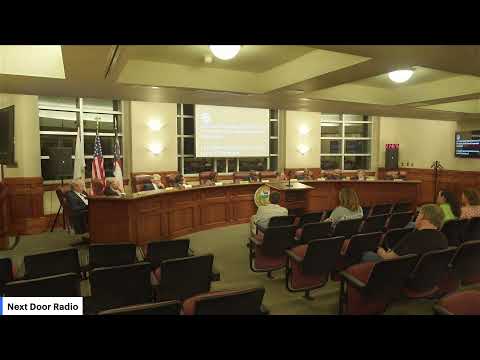
At a July 15 Oxford City Board of Commissioners meeting, the board voted to send a proposed amendment to the city's mobile food vending ordinance — intended to clarify rules for pushcarts and other small mobile vendors — back to the Planning & Development committee for additional work. The motion carried by voice vote after more than 90 minutes of public hearing, testimony and commissioner questions.
The amendment's lead proponent, Anna Hoffman, told the board she sought clearer language for how mobile food vendors use public space, citing startup costs for brick-and-mortar restaurants and the potential for mobile vendors to help new entrepreneurs test business models. "The intent behind this amendment proposal is that I wanted to clarify use, and zoning regulations for mobile [vendors] in the city of Oxford," Hoffman said during her presentation.
Hoffman proposed detailed requirements, including a 100-foot buffer from a restaurant's front entrance during that restaurant's hours (waivable by the restaurant), a minimum 5-foot pedestrian clearance on sidewalks, a 10-by-10-foot temporary footprint for many operations, and a prohibition on cooking beyond what the North Carolina Department of Health allows for pushcart vendors. She also reported more than 200 petition signatures and several letters of support from local businesses.
Commissioners and staff focused on operational details: how cart dimensions would affect parking spaces; whether a permit process would address grease disposal and sanitation; and the role of special-event permits versus routine temporary-use permits. Commissioners repeatedly asked who would enforce spacing and cleanup and whether the proposal would permit concentrations of vendors that could harm brick-and-mortar businesses. Hoffman said permit applications would include dimensions and setup details and that staff and the health department already regulate many aspects.
City staff and multiple speakers urged a negotiated approach. After discussion, a commissioner moved that the board "send it to the Planning & Development committee to work out the kinks and then come back to the board of commissioners." The motion passed on a voice vote.
What happens next: The Planning & Development committee will review the proposal with staff and the applicant to resolve technical and enforcement questions before any revised ordinance returns to the full board. The board and staff asked all parties to work together to address sidewalk clearance, parking impacts and special-event vs. everyday permitting.
The record: The public hearing included multiple business owners and residents who spoke in favor of clearer rules for pushcarts and mobile vendors, while several commissioners emphasized the need to avoid unintended loss of downtown parking or added burden on enforcement. The board took no final ordinance vote on July 15.