Baldwin County coroner reports declining overdoses but fentanyl remains a key driver
Loading...
Summary
Coroner Dr. Pierce presented the 2025 annual report to the Baldwin County Commission, citing 2,463 deaths countywide, 1,811 reported to the coroner's office, reduced autopsy referrals thanks to local toxicology testing, and that fentanyl was involved in 48% of overdose deaths.
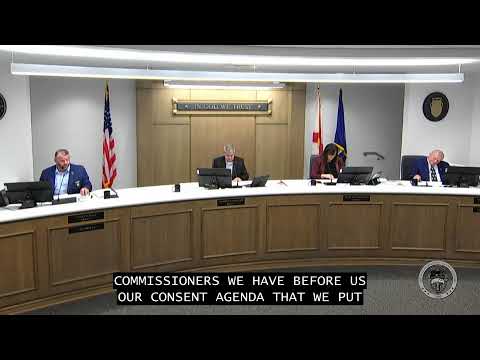
Coroner Dr. Pierce presented his ninth annual report to the Baldwin County Commission on Feb. 3, summarizing caseload, causes of death and operational changes the office made in 2025.
According to Dr. Pierce, 2,463 people passed away within Baldwin County last year (vital statistics); 1,811 of those deaths were reported to the coroner's office. About 1,100 of the reported cases were hospice deaths; the remaining 711 required further review (medical record review, external exam, toxicology, or referral to the state Department of Forensic Sciences). The office issued 1,521 cremation permits and certified 636 death certificates with an average completion time of 11.8 days.
Dr. Pierce said caseload has risen substantially: a 94% increase over the past decade and a 69% increase since 2019. The office now has a blended staff of four full‑time and four part‑time investigators plus administrative support; full‑time investigators Greg Schnupp and Claire Arnold handle daytime calls.
On overdose trends, Dr. Pierce reported that drug overdoses have trended downward after five years but cautioned that fentanyl remains a major factor, implicated in about 48% of overdose deaths. He credited wider availability of naloxone (Narcan) and local toxicology testing (Randox) with reducing referrals for full autopsy: the office referred 142 cases to the Alabama Department of Forensics for autopsy, down significantly from the prior year, a reduction Dr. Pierce estimated at 43 percent. He said local testing saved roughly $500 per transported case, totaling approximately $20,000 in transport savings for the year.
Commissioners thanked Dr. Pierce and noted ongoing county support for staffing and training. No formal policy action was taken during the meeting; the report was received for the record.