
LTSD 204 board hears Goal 5 update: $46.6M phase‑1 projects, ongoing tech costs and long‑term facility needs
Get AI-powered insights, summaries, and transcripts
Subscribe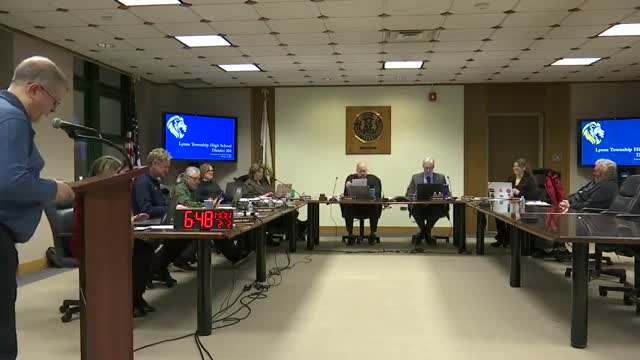
Summary
District staff reviewed Goal 5 (resource effectiveness and efficiencies): technology spending is now roughly $1.2M–$1.5M annually, Phase 1 facility work totaled about $46.6M, and remaining facility needs could total $85M–$100M absent new funding. Staff will publish FY25 audited statements and a five‑year forecast soon.
Lyons Township High School District 204 staff used the committee meeting to give a detailed update on Goal 5 of the district strategic plan — resource effectiveness and efficiencies — covering technology spending, facility projects completed under Phase 1, and funding options for remaining capital needs.
Brian, the board’s Goal 5 lead, said the district will publish FY25 audited financial statements shortly and present a five‑year forecast in March. He described three metrics used by the Illinois State Board of Education financial profile — fund balance to revenue, expenditure to revenue, and operating capacity — and said the district’s fund‑balance ratio, which was about 67.8% in 2023–24, will decline after approved fund transfers and project spending toward a target of roughly 50 percent.
On technology, Brian and Ed Tennant said the district’s ongoing technology spending has increased from roughly $300,000–$400,000 a few years ago to about $1.2 million–$1.5 million annually for devices and infrastructure. Ed noted replacement cycles of roughly four to five years for student devices and said older Chromebooks are reused as loaners, parts donors or repurposed for testing and training before responsible recycling.
Security and AI governance were discussed: the district maintains endpoint protections, network monitoring and cyber‑liability coverage and prefers closed systems when AI tools would process personally identifiable student data. Ed said the district uses a classroom 'traffic‑signal' approach to guide teachers’ use of AI tools.
Brian reviewed Phase 1 facilities highlights — a new South Campus cafeteria and music wing, HVAC upgrades, roof replacements, LED lighting upgrades, elevator work and accessibility improvements — and said those projects were funded largely with a $27 million bond sale, interest proceeds (roughly $1 million) and roughly $18.6 million transferred from reserves to capital funds. He estimated the Phase 1 total at about $46.6 million and said remaining facility needs identified in the facility study could be in the $85 million–$100 million range.
Trustees discussed community engagement and prioritization ahead of any future large funding decision, including public tours, surveys and possible alternatives to bonding such as land sale proceeds or intergovernmental partnerships (a Westfield soccer/turf retention project with the village of La Grange was raised as a potential collaboration). Brian said the next significant bond window is several years away and noted that, in the meantime, the district expects to put $1 million–$2 million per year toward capital projects depending on available operating resources.
Near‑term administration tasks include finalizing FY25 audited financials, updating the five‑year forecast in March and issuing bid specifications for asbestos abatement and life‑safety work to be approved for the coming summer.