Cheyenne committee narrows administrative‑inspection warrant ordinance after public privacy concerns
Loading...
Summary
After hours of public comment over Fourth Amendment concerns, the City of Cheyenne Public Service Committee passed a substitute ordinance limiting administrative inspection warrants to specific circumstances and adding reporting and procedural safeguards.
The City of Cheyenne Public Service Committee on Monday advanced a substitute ordinance to create limited administrative inspection warrants after extended public comment and several amendments.
Mayor Patrick Collins opened the staff report, saying the substitute limits applications for administrative inspection warrants to four circumstances: a post‑fire investigation, life‑safety inspections by the fire department, properties with an open building permit, and abandoned properties. "We have to be able to do the routine parts of the follow‑up inspections," Collins said, arguing the city must carry out inspections required by adopted building and fire codes or risk the state taking over.
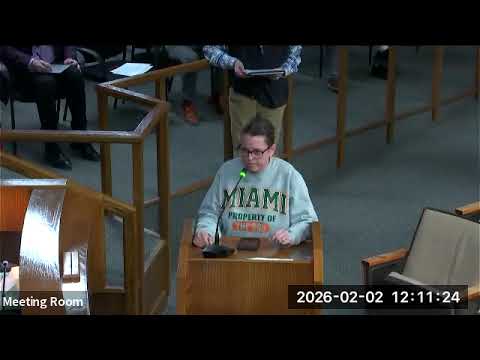
Residents and civil‑liberties advocates urged tighter language. "This is a suspicionless entry clause," said Patricia McCoy during public comment, asking that section 1.28.0.02(b) be removed because it would allow entry without individualized suspicion. Bailey Turner warned the ordinance could "normalize entry based on compliance objectives rather than individualized suspicion," and said phrases such as "reasonably necessary" are undefined.
City staff and the fire marshal pushed back on some public concerns and described existing safeguards. Fire Marshal Bob Mason said the fire code generally applies to commercial facilities and residential uses that operate as businesses and described notice‑and‑order practices the department uses when access is refused. "If they do deny us access into the property … we serve them a notice and order saying that we're gonna show up on the property," Mason said, noting formal judicial process exists short of an administrative warrant.
The committee adopted several amendments before passing the substitute. Members added a requirement that an incident report be provided to the council after each executed administrative warrant; city attorney John Brody recommended the report come from the department that requested and executed the warrant. The committee also narrowed the ‘‘routine, periodic or area inspection’’ language so it explicitly applies to commercial properties or any property with an open building permit. Finally, the committee appended language clarifying probable cause also includes conditions that "cause an immediate risk to public health and/or safety."
The substitute also specifies procedural protections in the ordinance: applicants must file an affidavit describing probable cause, the applicant's authority, the legal basis for the inspection, and the specific property and scope of the inspection; municipal judges will evaluate the affidavit and, if satisfied, issue warrants that name authorized executors, define scope and hours of execution, forbid "no‑knock" entries except in limited abandoned‑property circumstances, allow inclusion of law enforcement when necessary for safety, and set an initial 10‑day warrant expiration with limited short extensions.
City Attorney John Brody told the committee that the affidavit requirement satisfies the state constitutional standard reflected in Article I, Section 4 of the Wyoming Constitution. After voice votes on amendments, the committee voted to pass the substitute and recommended approval to the full council on third reading.
Next steps: The ordinance will go to the full City Council for final reading as amended; committee members and several members of the public said they expect further language refinements before final adoption.