
Granville County BOE warns of $2.8M funding shortfall as enrollment falls; consolidation cited as key savings
Get AI-powered insights, summaries, and transcripts
Subscribe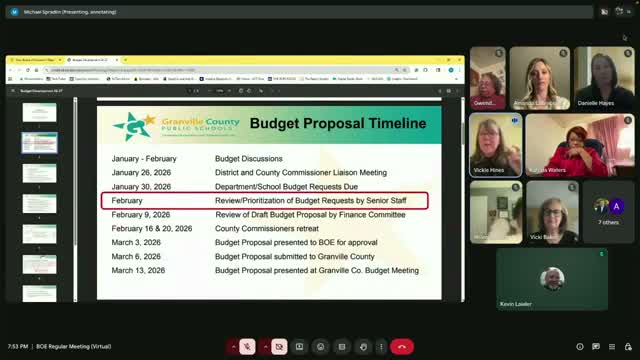
Summary
The Granville County Board of Education reviewed budget projections after losing more than 400 students this year, forecasting roughly $2.8 million in reduced state funding and a projected fund balance near $4.0 million (about 5.5%). Officials said prior consolidation moves saved roughly $3 million annually but additional cuts remain likely.
The Granville County Board of Education on Feb. 3 heard a detailed budget update warning that falling enrollment will reduce state funding by an estimated $2.8 million for the coming year.
Finance Director Miss Hines told the board the district lost more than 400 students this school year and is operating in a funding‑in‑arrears model; the district’s average daily membership fell from 6,273 (Dec. 1, 2024) to roughly 5,900 in the current reporting period. Miss Hines said those enrollment losses translate into a projected drop of about $2.8 million in positions and dollars if current trends continue.
The staff presented a projected local fund balance of about $4.0 million, or roughly 5.5% of the operating budget, below commonly cited best practices near 8%. “That fund balance is our emergency fund,” Miss Hines said, noting the district plans to use it only for one‑time expenses. She cautioned that the district’s low‑wealth funding and state allotments remain uncertain until the General Assembly finalizes allocations.
Superintendent Dr. Winborne and finance staff defended last year’s consolidation decisions as a major driver of savings. Dr. Winborne said closing under‑utilized campuses and aligning capacity to enrollment reduced annual recurring costs by “almost $3,000,000,” mostly through lower operating and personnel expenses. He added that keeping campuses nearer capacity also improves program offerings and avoids combo classes.
Board members and staff flagged remaining operational risks. Miss Hines noted capital‑outlay spending was already high (about 80% of the capital outlay budget to date) and warned that a major facility failure — such as a chiller or HVAC replacement — could cost roughly $1 million and strain reserves. HR staff said roughly 20 positions have already been eliminated for next year, with at least eight additional teacher positions expected and possible further reductions to paraprofessional and classified roles depending on Title I and final allotments.
Board discussion included an offer from one member to reconsider a recent school‑closure vote if a board colleague can present a line‑item plan to replace the $2.8 million shortfall before the district’s county budget deadline. Miss Hines said the district will present a draft county proposal to the finance committee next week and aims to deliver a formal budget proposal at the March board meeting and to the county by March 13.
The board unanimously approved routine budget amendments earlier in the meeting, including an SRO grant of $346,849 added to the other restricted fund balance and smaller state and grant revenues for technology recycling and hygiene grants.
The board will continue budget development over the coming weeks, with staff emphasizing the need to prioritize continuation funds, recruitment and retention, safety and security, and capital needs in a tighter resource environment.