Committee advances early-education scholarship using GET surplus
Loading...
Summary
The Postsecondary Education and Workforce Committee voted to report a proposed substitute for House Bill 2438 out of committee with a due-pass recommendation; the substitute would create an early education scholarship funded annually from the GET account and include a statute-of-limitations provision and reporting changes.
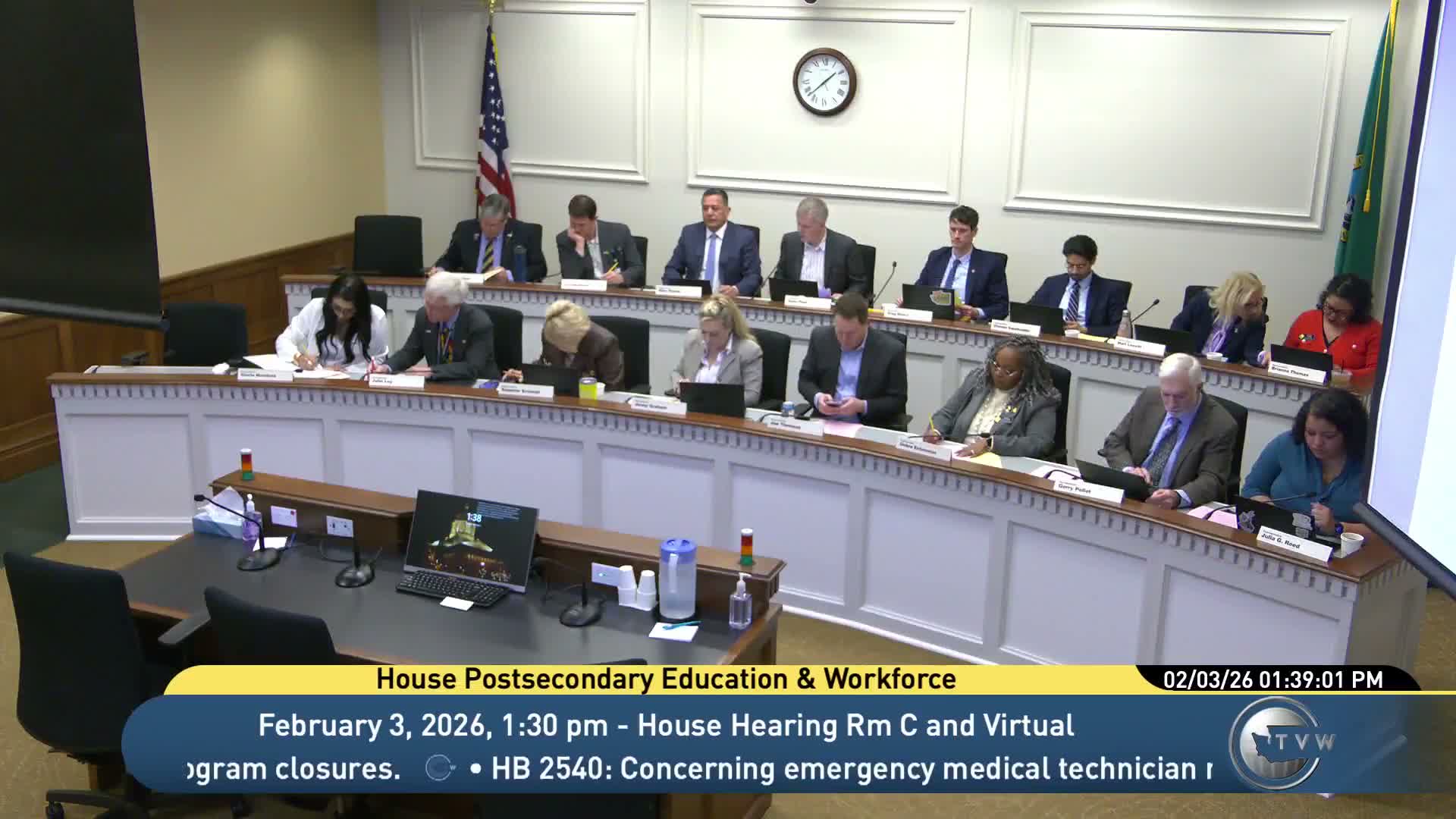
The Postsecondary Education and Workforce Committee on Feb. 3 voted to report substitute House Bill 2438 out of committee with a due‑pass recommendation, advancing a proposal that would create a tuition scholarship aimed at training early‑childhood educators.
Saranda Ross, counsel to the committee, told members the proposed substitute (H‑3363.2) would create an early‑education degree‑seekers scholarship providing up to 90 credits of tuition‑free community or technical college coursework for eligible early‑childhood education certificate or associate degree programs. "Eligibility requirements are modified to allow students who already have an associate's degree to receive up to 30 credits under the scholarship," Ross said, and the substitute would create an early education scholarship account in the custody of the state treasurer.
The substitute would direct an annual allocation of $10,000,000 from the GET account and cap administrative spending at no more than $500,000 annually from that allocation; Ross said the allocation language was changed from a one‑time appropriation to a yearly allotment. The substitute also adds a statute‑of‑limitations clause barring legal challenges to the scholarship unless filed before Jan. 1, 2030, and extends the deadline for the required report to the Legislature.
Supporters argued the proposal uses GET program surplus to address a shortage of early‑childhood educators. "We have a tremendous shortage and to expand support for those with a program that provides tuition assistance" Rep. Pollet said, urging members to back the substitute. Ranking Member Ybarra said members on his side were concerned about moving GET funds that parents had contributed. "The parents who have put into the GET account . . . would not want their monies moved," Ybarra said, explaining why some members planned to vote no.
After debate, staff called roll and recorded 13 ayes and 4 nays; staff announced the substitute was reported out of committee with a due‑pass recommendation. The committee will send the substitute forward as if it were the original bill for subsequent floor consideration.
The committee record shows the proposed substitute contains specific administrative limits, eligibility changes, and the 01/01/2030 statute‑of‑limitations date; a fiscal note will be prepared if the substitute advances.