
Committee hears bill directing Medicaid waiver to cover traditional Indian medicine
Get AI-powered insights, summaries, and transcripts
Subscribe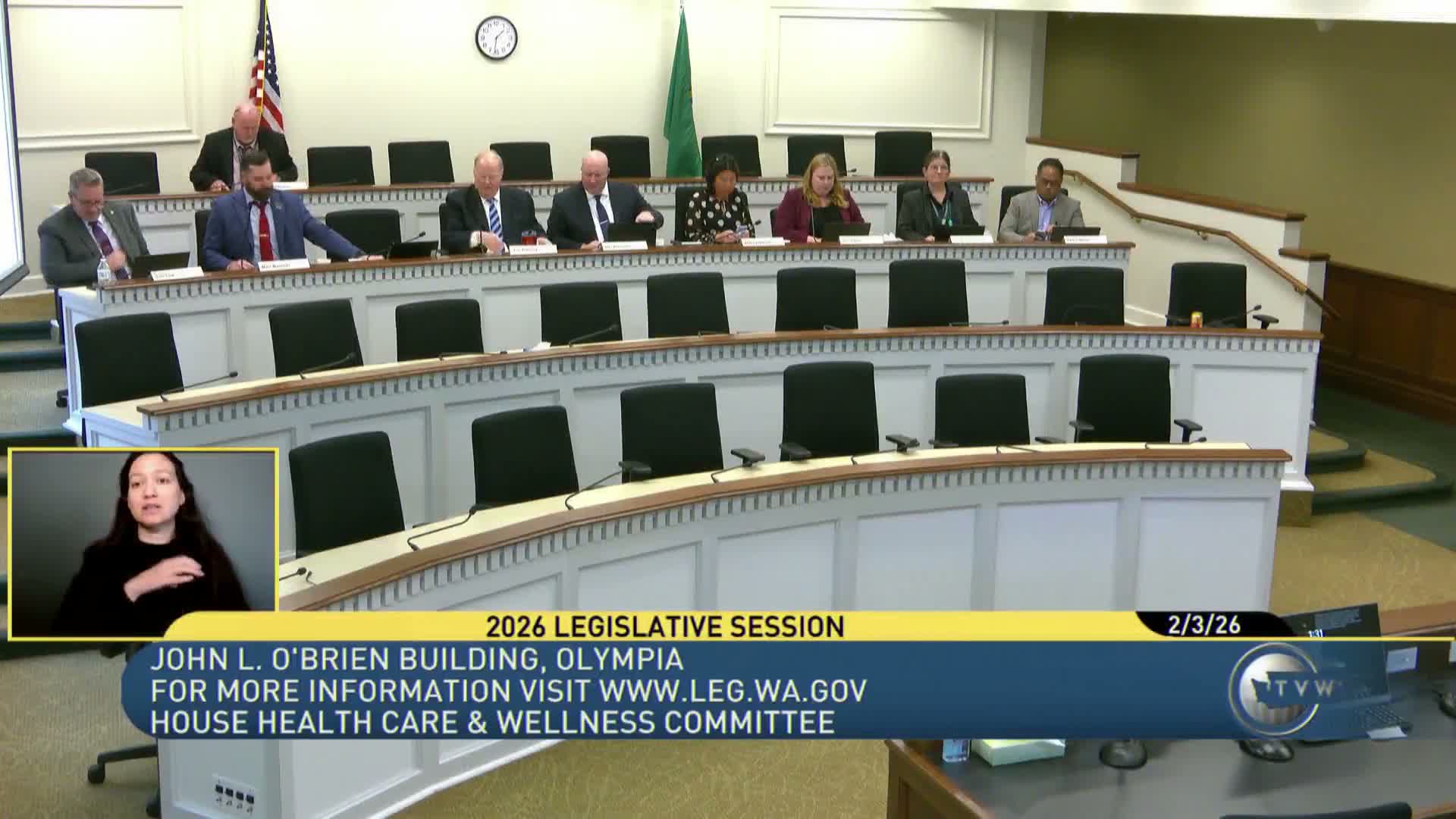
Summary
House Healthcare and Wellness Committee heard House Bill 2555, which would direct the Health Care Authority to apply for a CMS waiver to allow Medicaid coverage of traditional health practices provided through Indian health facilities; tribal leaders and HCA staff discussed timing, reimbursement, and inclusion of urban Indian organizations.
At a meeting of the House Healthcare and Wellness Committee, lawmakers heard testimony on House Bill 2555, which would direct the Health Care Authority (HCA) to apply to the Centers for Medicare & Medicaid Services for a waiver to allow Medicaid coverage of traditional health-care practices delivered at Indian health facilities.
Chris Blake, staff to the committee, told members HB 2555 would authorize the HCA to pursue a CMS waiver so that ‘‘traditional health care practices’’—defined in the bill as knowledge, skills and practices indigenous to different cultures—could be reimbursed by Medicaid when provided at Indian Health Service facilities, tribal-operated clinics or urban Indian organizations. Blake said CMS guidance grants a 100% federal match for services to members of federally recognized tribes, while non-tribal patients would receive the standard federal match rate.
Vice Chair Deborah Lekanoff, the bill’s sponsor, said the measure is a ‘‘technical fix’’ required for the HCA to apply for the waiver and said recognizing traditional Indian medicine ‘‘would strengthen the Indian health care system’’ and allow traditional practitioners to be ‘‘recognized as Indian health care providers’’ and reimbursed by federal funds. Lekanoff noted several other states have obtained CMS approval for similar waivers and described recovery-center outcomes and cultural reasons for the expansion.
Tribal leaders and health administrators spoke in favor of the bill. Vicky Lowe of the American Indian Health Commission urged submission of the waiver and said inclusion of urban Indian organizations would expand access and leverage federal funding. Esther Lucero of the Seattle Indian Health Board presented program data she said show large reductions in suicidal ideation (71%) and improvements in substance-abuse and depression outcomes after traditional medicine services; she argued the services benefit both Native and non-Native patients.
Aaron Spark, HCA’s Office of Tribal Affairs administrator, said HCA supports expanding access but raised concerns about how payment would be structured, the bill’s targeted submission timeline, and fiscal impacts of including urban Indian organizations. He noted the governor’s budget directs HCA to provide a financing recommendation by Sept. 30 and cautioned the bill’s July 1, 2026 timeline could be difficult while reimbursement details are resolved.
The committee closed the public hearing without a vote and moved on to the next agenda item. The HCA and tribes said they will continue consultations to refine reimbursement design and implementation timing.