Get Full Government Meeting Transcripts, Videos, & Alerts Forever!
Get email alerts on the Food Access topic
No spam. Unsubscribe anytime.
Bill would require grocery and pharmacy closure notice, let cities use zoning and vacancy fees to prevent 'food deserts'
Summary
House Bill 2,573 would require full-service grocery stores and pharmacies to provide at least six months' notice before closure (one year in designated overburdened communities), allow cities to zone for grocery uses and impose excise or nuisance fees on properties that remain vacant, and authorize the attorney general to seek injunctions for failures to comply.
House Bill 2,573, introduced to the House Committee on Local Government, would require full-service grocery stores and pharmacies relied on by local comprehensive plans to provide at least six months' notice of reduced service or proposed closure and one year of notice if the store is in an "overburdened community." The bill also authorizes cities and counties to zone properties to require ongoing grocery uses, to impose an excise tax of up to $500,000 per acre (or a portion thereof) for each year the property does not house a grocery, and to levy a nuisance fee of up to $250,000 per acre; the attorney general could seek a court injunction for noncompliance.
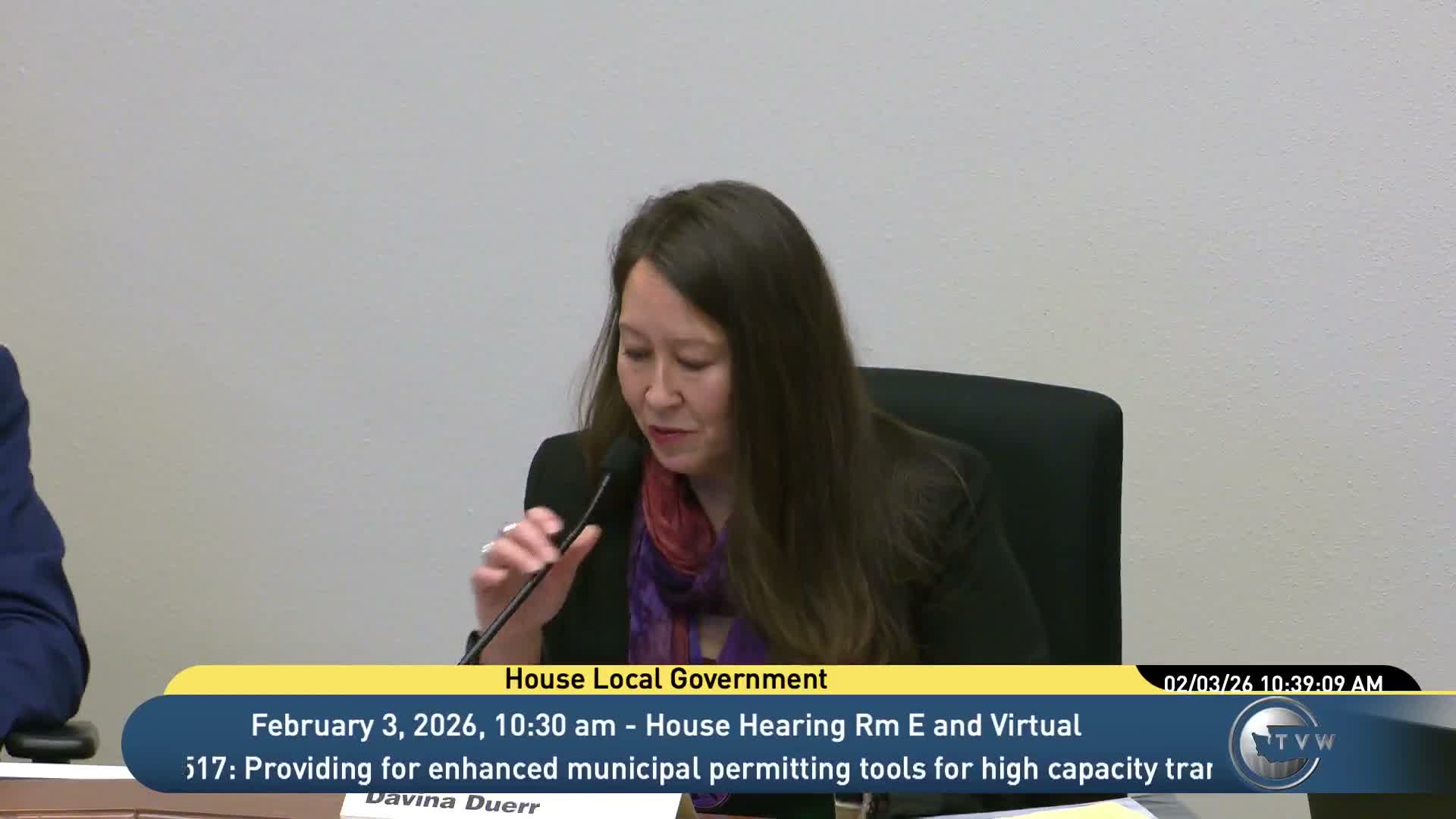
Representative Pollet, the bill sponsor, said the measure responds to a wave of supermarket and pharmacy closures that left some neighborhoods without nearby food or medicine. "This legislation gives our cities new tools to respond to a closure by requiring notice and then say, how will we respond?" she told the committee, adding that zoning incentives and fee waivers for temporary community uses are intended to avoid penalizing owners who repurpose sites for community benefit. Community witnesses described harms when large stores close on short notice: "The store … closed mid-October. We are seeing a lot of community members being impacted, especially those with mobility issues, seniors, especially people with disabilities," Cesar Garcia said in testimony on behalf of a Lake City community group.
Local officials and supportive groups argued the bill would help cities plan for replacement services, prevent blight and crime at empty big-box sites, and offer tools to prioritize food access in planning. King County Councilmember Rod Dombowski said closures there "reduced access to food and medicine," warning that a fenced vacant store had already been tagged with graffiti and "poses a risk for increased criminal activity." Supporters suggested directing vacancy taxes primarily at company-owned properties or leaseholds to avoid unfairly penalizing independent landlords.
Industry representatives opposed the bill, cautioning it could punish independent owners and chill investment. "Operating a profitable business right now in Washington state is really, really hard," Katie Beeson of the Washington Food Industry Association told the committee, warning that vacancy taxes could be problematic for small, independent owners who cannot find buyers. Trade groups urged the legislature to address operating and public-safety drivers rather than add new punitive taxes.
The bill would also add a "healthy communities" element to the Growth Management Act (GMA) and allow cities to include notice requirements in land-use permits and public postings. Representative Pollet and witnesses repeatedly emphasized that the notice period is intended to give residents time to transfer prescriptions, for transit adjustments, and for communities to recruit alternative services.
The committee heard more than 30 public comments for and against the bill and closed the hearing without taking executive action on HB 2,573. Provisions likely to require follow-up include how the excise and nuisance fees would be applied between owners and lessees, exact definitions of "overburdened communities," and the process for waiver or temporary uses that would avoid taxation.