Get Full Government Meeting Transcripts, Videos, & Alerts Forever!
Get email alerts on the Student Elections topic
No spam. Unsubscribe anytime.
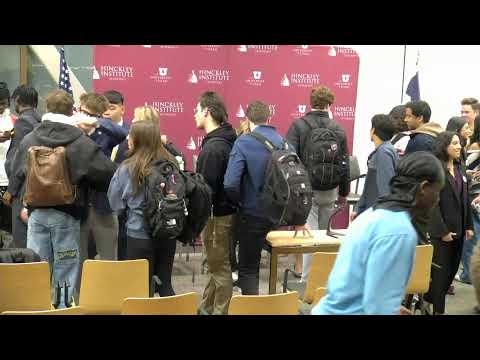
University of Utah ASUU primary debate spotlights student priorities on tuition, safety and services
Summary
At a debate hosted at the Hinckley Institute of Politics, executive tickets competing in the ASUU primary outlined platforms on lowering tuition, expanding student transportation and increasing funding and visibility for student organizations; moderators said primary voting is the 11th–13th.
The Hinckley Institute of Politics hosted a primary debate for Associated Students of the University of Utah (ASUU) executive tickets where candidates outlined plans on tuition, student services, safety and sustainability. Josie Renick, ASU elections director, opened the event and reminded students that the primary voting period was the 11th–13th.
The debate was moderated by Kefa Abakuki, student governance assistant of ASUU, and Katie Nelson, the university attorney general. Candidates from multiple tickets each gave 30‑second opening statements and answered timed questions about collaboration with campus administration, supporting marginalized communities, budgeting and sustainability.
Across positions, candidates proposed creating a permanent student lobbyist group focused on affordability, expanding campus transit (including Uride and shuttle stops), and increasing funding and recognition for Registered Student Organizations (RSOs). Several candidates emphasized mental health and community-building as priorities; one proposed a campus meal‑swipe sharing pool to help students facing food insecurity.
Speakers also differed on administrative details: one candidate said ASU controls about $1.5 million in discretionary funds while another, after reviewing records, said the figure was over $1.8 million. Candidates suggested redirecting surplus event spending toward RSOs and creating ad hoc committees to study needs of marginalized students.
All tickets said they supported ASU’s sustainability efforts. Proposals included replacing hand‑towel dispensers with energy‑efficient dryers, removing nonfunctional turf to conserve water, and banning single‑use plastic bags on campus.
The debate ended with closing remarks from each ticket and a reminder of the next debate at the Epicenter on February 19. "We're also so grateful for Hinckley for allowing us to collaborate with them and using the space," Renick said, thanking student volunteers and organizers.