Arizona committee backs voluntary county permits to certify mobile emission reduction credits
Loading...
Summary
The House Natural Resources, Energy and Water Committee advanced HB 24-28 to let counties and ADEQ issue voluntary permits certifying emission reduction credits (ERCs) for mobile and portable sources; ADEQ said it is neutral and urged safeguards to ensure ERCs are permanent, enforceable and quantifiable.
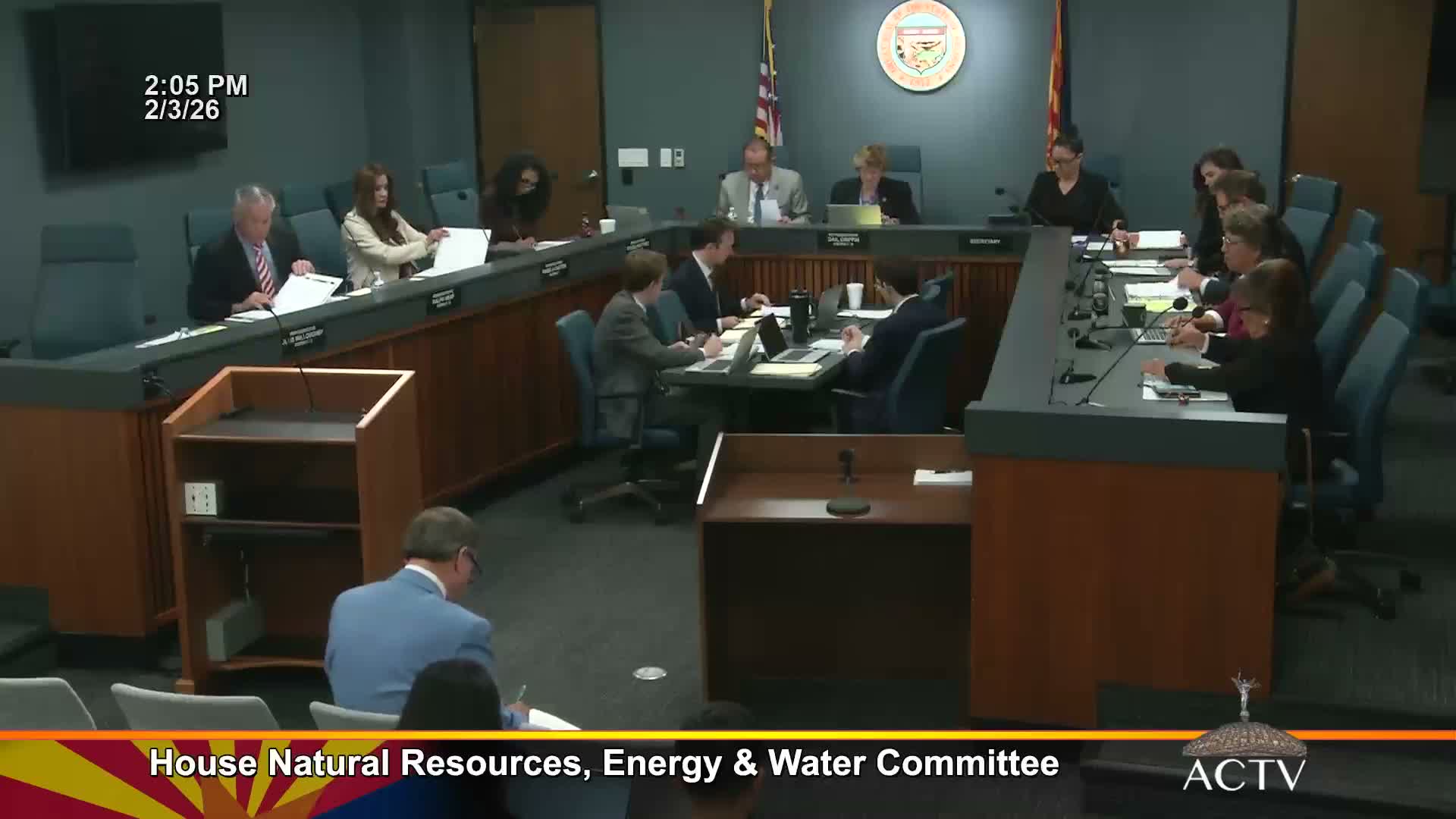
House Bill 24-28, advanced by the House Committee on Natural Resources, Energy and Water on Feb. 2, would authorize counties and the Arizona Department of Environmental Quality to issue voluntary permits that certify emission reduction credits for mobile and portable sources.
Staff told the committee the Griffin amendment (dated 02/02/2026 08:36AM) refines the conditions under which a county may issue a permit, makes county approval binding on an applicant and clarifies application requirements. Krista Osterberg, ADEQ’s chief legislative liaison, testified the agency is neutral on the bill and amendment. She said Arizona faces an ongoing shortage of emission reduction credits (ERCs) for ozone precursors, which can hinder the state’s ability to attract high-tech industry, and that voluntary limits included in a stationary-source permit are a practical way to make ERCs permanent, enforceable, quantifiable and surplus.
Tristan Wolfson of Maricopa County told the committee the measure allows counties to generate ERCs by creating permanent emission reductions in nonattainment areas and explained that federally required ERCs are traded at an offset ratio of 1.15 to 1 (requiring more offsets than tons added).
After brief questions, the committee adopted the Griffin amendment and voted to return HB 24-28 as amended with a due-pass recommendation. The clerk recorded 10 ayes and 0 nays. The bill will move to the floor with the committee’s recommendation.
What comes next: Because ERCs implicate both state and federal air quality obligations, additional rulemaking or implementation guidance from ADEQ is likely if the bill becomes law.