
Committee advances bill to modernize Utah Health Data Authority and tighten privacy safeguards
Get AI-powered insights, summaries, and transcripts
Sign Up Free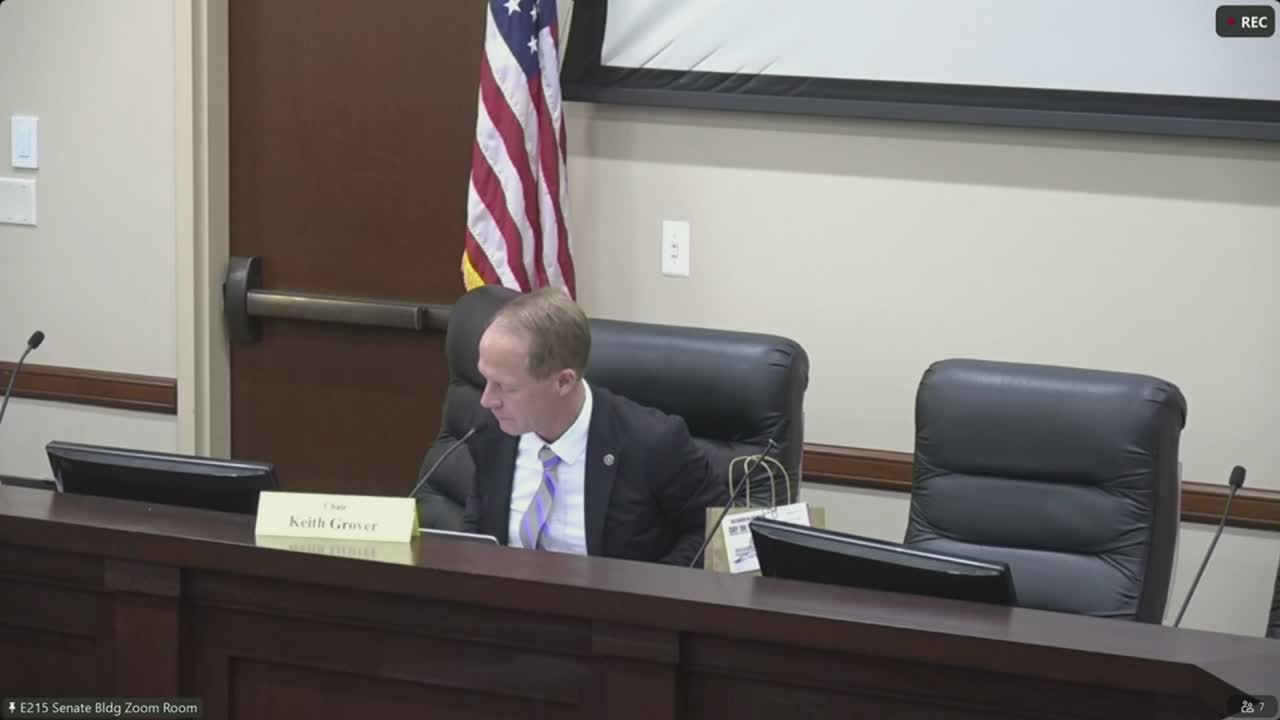
Summary
The committee favorably recommended first substitute HB 199 to update the Utah Health Data Authority's statutory language, require publicly available strategic data plans, and add privacy and security safeguards following an audit; sponsor said the changes respond to an OLAG review.
The Senate Health and Human Services Committee voted to pass first substitute HB 199, legislation that modernizes the statutory framework for the Utah Health Data Authority and strengthens requirements for data collection, management, analysis and public reporting.
Representative Thurston, presenting the bill, said the authority was established in 1990 and that recent audit recommendations prompted updates to bring statute into alignment with current technology and privacy expectations. He described new statutory requirements that would require the Department of Health and Human Services to maintain publicly available strategic plans for data collection, management, analysis and dissemination, and to adopt additional privacy and security safeguards outlined in the bill.
Committee members expressed support and asked technical questions about individual data access. Representative Thurston said the Health Data Authority does not currently provide individuals full copies of their records on personal devices, and that broad individual access to complete medical records is likely still several years away, typically driven by private‑sector tools. The committee voted to favorably recommend the substitute to the Senate.
The bill was framed as implementing audit recommendations and as a routine modernization intended to preserve the utility of health data for planning, Medicaid evaluation, quality reporting and other public‑health functions while adding safeguards for privacy and security.