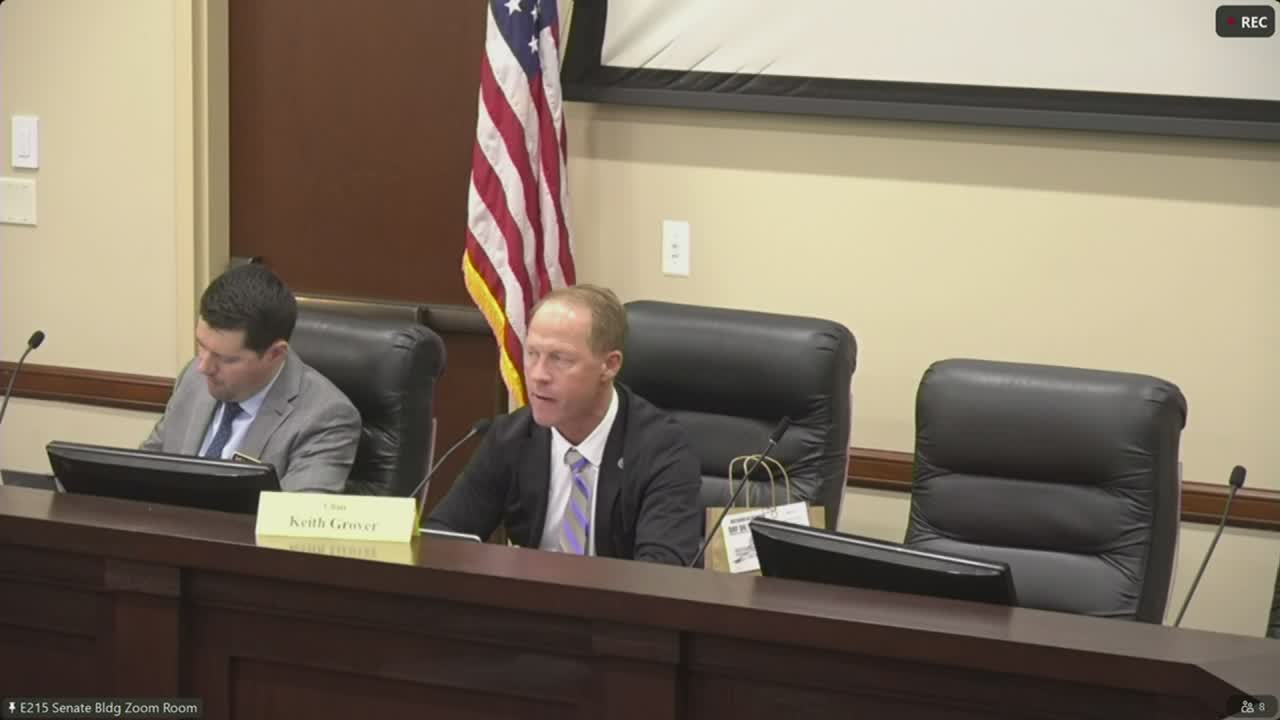
Senate committee backs resolution urging PHP to cover at least one non‑opioid pain drug
Loading...
Summary
The Senate Health and Human Services Committee voted to favorably recommend SCR 5, a concurrent resolution asking the public employee health plan to include at least one clinically appropriate non‑opioid prescription option on its formulary beginning with the 2027 plan year; industry and medical groups testified in support.
The Senate Health and Human Services Committee voted to favorably recommend SCR 5, a concurrent resolution directing the Public Health Plan (PHP) to provide parity between opioids and at least one clinically appropriate non‑opioid prescription option, with an implementation date beginning in the 2027 plan year.
Supporters told the committee the measure would expand safe pain‑management choices for patients and encourage development of non‑addictive medicines. Chad Duncan, a pharmacist who said he works on health economics and outcomes research at Vertex Pharmaceuticals, told the committee SCR 5 "is not a mandate. It simply creates a parity between opioids and non opioids to enable providers and patients the choice of exposure to opioids and the addictive properties, of those versus a non opioid." Kelvin Cullimore of Bio Utah added the resolution would help foster development by giving novel therapies equal consideration on formularies.
A PHP representative, Chet Loftus, said the agency had prepared a fiscal note and worked with Vertex on cost estimates; he told the committee staff believe the cost could be kept under $50,000 if specific language aligns expectations. The sponsor acknowledged that retail opioid pills can cost about 60¢ each while the new non‑opioid regimens often carry higher per‑pill prices and a typical 14‑day course could run roughly $200, but called that an investment to reduce addiction risk.
The Utah Medical Association and recovery advocates also supported the resolution. Michelle Mccomber of the Utah Medical Association said the group "supports this resolution" because covering non‑opioid options gives patients more choices. Billy O'Brien, a program director with Young People in Recovery who identified himself as a person in long‑term recovery, described instances where non‑opioid options were not available and said the resolution addresses those barriers.
Committee members asked procedural questions about how the Legislature directs PHP; the sponsor said a concurrent resolution is the appropriate legislative mechanism. After discussion the committee adopted a technical amendment clarifying the 2027 plan‑year start and voted to pass SCR 5 to the Senate by voice vote.
The committee did not record a roll‑call vote in the transcript; the resolution was approved and referred to the full Senate for further consideration.