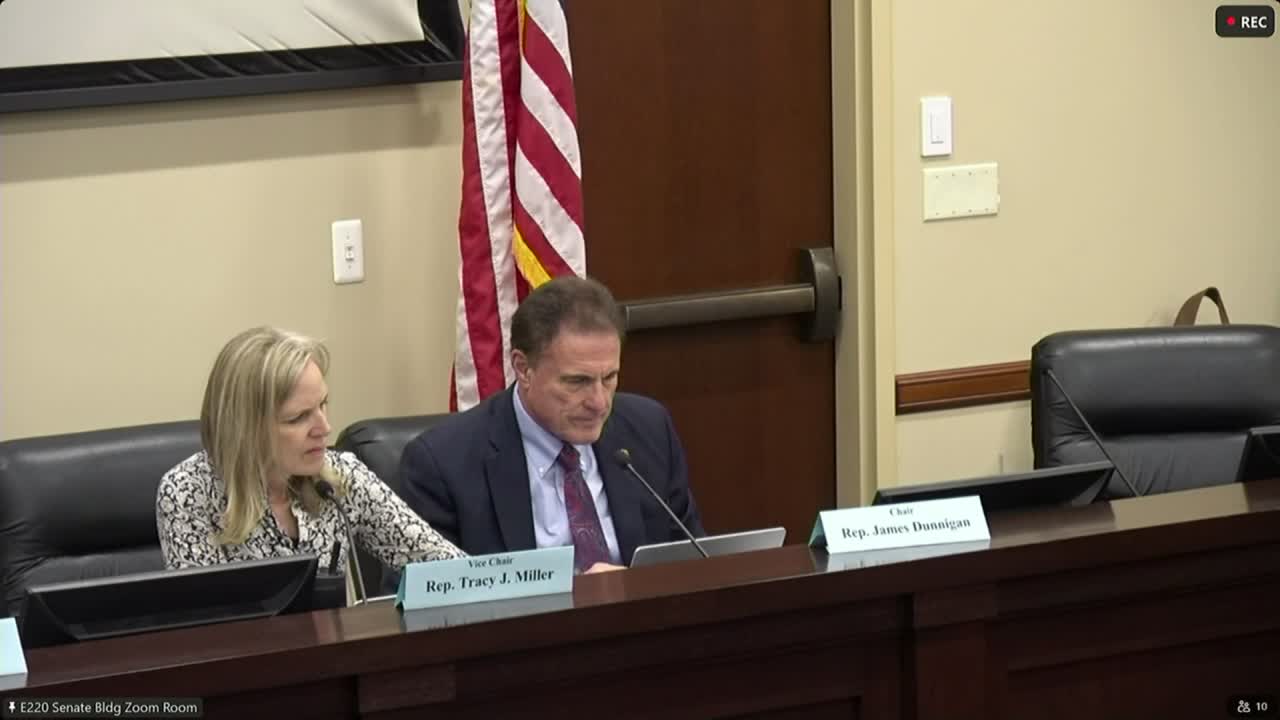
House panel raises cap on Utah Marriage Commission fee, sending amended bill forward 7–1
Loading...
Summary
The House Political Subdivisions Committee adopted an amendment raising the statutory cap on dedicated marriage-license fees and passed HB 324 as amended (7–1). Sponsors said removing or raising the cap will stabilize funding for the Utah Marriage Commission’s statewide outreach and educational resources.
Salt Lake City — The House Political Subdivisions Committee on Jan. 29 moved HB 324, a measure altering how fees tied to online marriage licenses are handled, out of committee with a favorable recommendation, voting 7–1. The adopted amendment raises the dedicated cap to $600,000 and allows the Utah Marriage Commission to retain fee revenue above prior limits for use on its programs and outreach.
Representative Melissa G. Ballard, sponsor of HB 324, told the committee the commission provides free relationship-education content statewide through Utah State University’s extension and a community board. Ballard said the current $400,000 cap forces excess revenue into the general fund with no guarantee those dollars support relationship programs the fee was intended to fund.
Dr. Ryan Higginbotham, associate vice president for extension at Utah State University, spoke remotely about the bill’s administrative impact. He said the cap creates an unpredictable, on-again/off-again funding stream that complicates contract commitments and year-round services. Higginbotham described the bill as not creating new authority but enabling the commission to “scale existing services,” citing more targeted outreach and advertising to reach different audiences.
Utah County officials described the magnitude of the fees collected. Aaron Davidson, Utah County clerk, told the committee Utah County contributed roughly $560,000 in fee revenue this year but only $400,000 was available to the commission under the cap; the remaining funds reverted to the general fund. Russ Rampton, digital services supervisor for Utah County’s marriage license office, said the county issued about 32,000 licenses last year and has seen steady growth in online usage.
Several committee members pressed the sponsor about oversight and purpose. Representative Thomas W. Peterson and others said they were comfortable moving the item forward but expressed concern about granting an open-ended funding leash without clearer program-level spending priorities. The sponsor noted the commission already reports to a legislative committee and argued existing reporting provides oversight.
Amendment 2, which raised the cap to $600,000, passed and the final motion to pass HB 324 as amended carried 7–1, with Representative Hansen recorded in opposition. The committee’s action sends the bill to the next House floor or committee step per legislative process.
Next steps: HB 324 will proceed according to the Legislature’s scheduling rules; the committee record shows the amendment language and the recorded votes will be part of the bill packet.