Get Full Government Meeting Transcripts, Videos, & Alerts Forever!
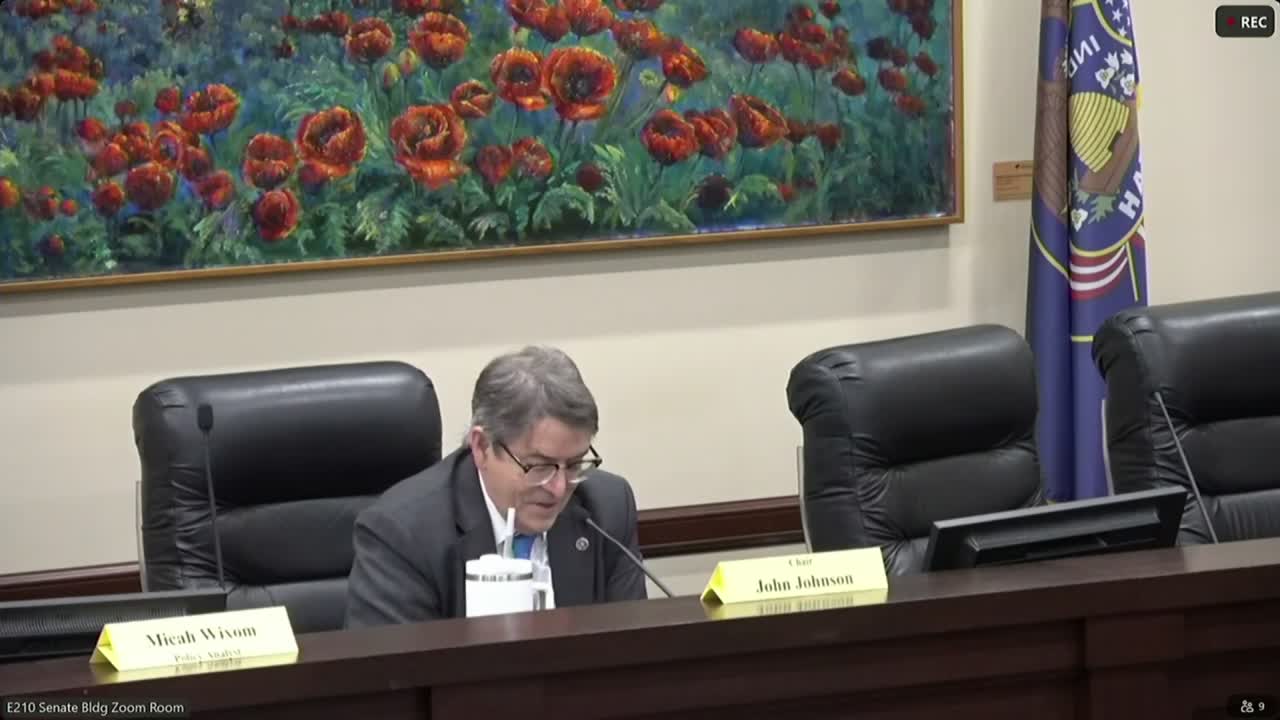
Committee approves SB 216 to restructure higher‑education performance and enrollment funding
Summary
The committee gave SB 216 a favorable recommendation after approving a clarifying amendment; the bill sets a five‑year baseline for performance metrics, differentiates measures by institutional mission, smooths enrollment funding over a five‑year average, and allows institutions to pick high‑demand job categories.
Senators approved an amended version of SB 216, a bill that restructures higher‑education funding in Utah by setting performance metrics on a five‑year baseline and smoothing enrollment funding over a five‑year period.
Sponsor Senator Milner explained the bill’s core features: community and regional institutions would be measured on first‑year retention and completion; degree‑granting and research universities would be measured on…
Already have an account? Log in
Subscribe to keep reading
Unlock the rest of this article — and every article on Citizen Portal.
- Unlimited articles
- AI-powered breakdowns of topics, speakers, decisions, and budgets
- Instant alerts when your location has a new meeting
- Follow topics and more locations
- 1,000 AI Insights / month, plus AI Chat