Get Full Government Meeting Transcripts, Videos, & Alerts Forever!
Get email alerts on the Public Records Privacy topic
No spam. Unsubscribe anytime.
Committee advances bill to keep sensitive tax-abatement data private while preserving financial transparency
Summary
The House Revenue and Taxation Committee unanimously adopted and favorably recommended HB 325, which narrows public-records rules to allow redaction of sensitive information in abatements and deferrals (veterans, seniors, blind) while reaffirming that core financial records remain public. The Utah Office of Data Privacy presented county-level findings.
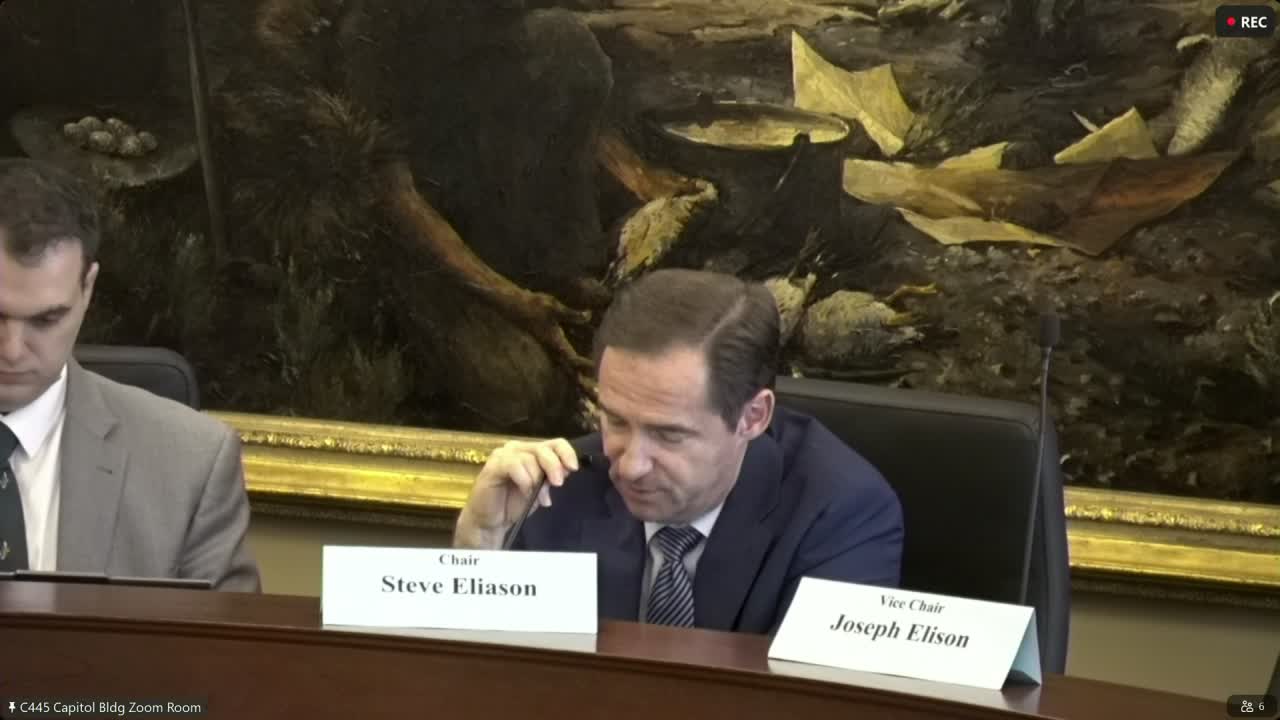
The House Revenue and Taxation Standing Committee on Feb. 3 unanimously adopted a second substitute and gave a favorable recommendation to HB 325, a bill the sponsor described as a narrow update to public-records law to balance transparency with privacy.
Representative Sheppard, sponsor of HB 325, said the bill keeps initial contact reports presumptively public but clarifies that entities have discretion to redact victim names from those reports in cases of significant trauma or vulnerability. The sponsor said the bill also clarifies that core financial records — general ledgers and records showing receipt and expenditure of public funds — remain public.
The sponsor emphasized protections for sensitive personal information tied to property tax abatements, deferrals and exemptions, citing examples where records indicating a veteran abatement or other codes could reveal an individual's absence from home or degree of disability. "It shows clearly that she's a tax abatement and what type of tax payment's on there," the sponsor said when showing examples; the sponsor said that could make vulnerable homeowners targets for theft or scams.
Christopher Bramwell, chief privacy officer and director of the Utah Office of Data Privacy, said the office’s work and research with the Herbert Policy Institute found wide county-level variation in how veteran abatements and related records are classified and retained. Bramwell said that inconsistency can produce unequal privacy protections and cited recommendations to make records about vulnerable populations private by default while keeping non-sensitive abatement information public.
Representative Newell asked whether the bill's approach could conceal wealthy actors using trusts for abatements; the sponsor and Bramwell replied the targeted exemptions in the bill apply to specific vulnerable categories (blind, certain veteran abatements, indigent elderly), and that other abatements tied to business or institutional entities would remain public.
Representative Colford moved to adopt the second substitute and to favorably recommend HB 325 (second substitute); both motions passed unanimously by voice votes with the sponsor waiving remarks and roll-call voting not recorded in the transcript.
The committee forwarded HB 325 with a favorable recommendation to the next stage; the bill reflects collaboration with the media coalition, the Utah Office of Data Privacy, the Herbert Institute for Public Policy, and members of the bridal commission, according to the sponsor’s remarks.