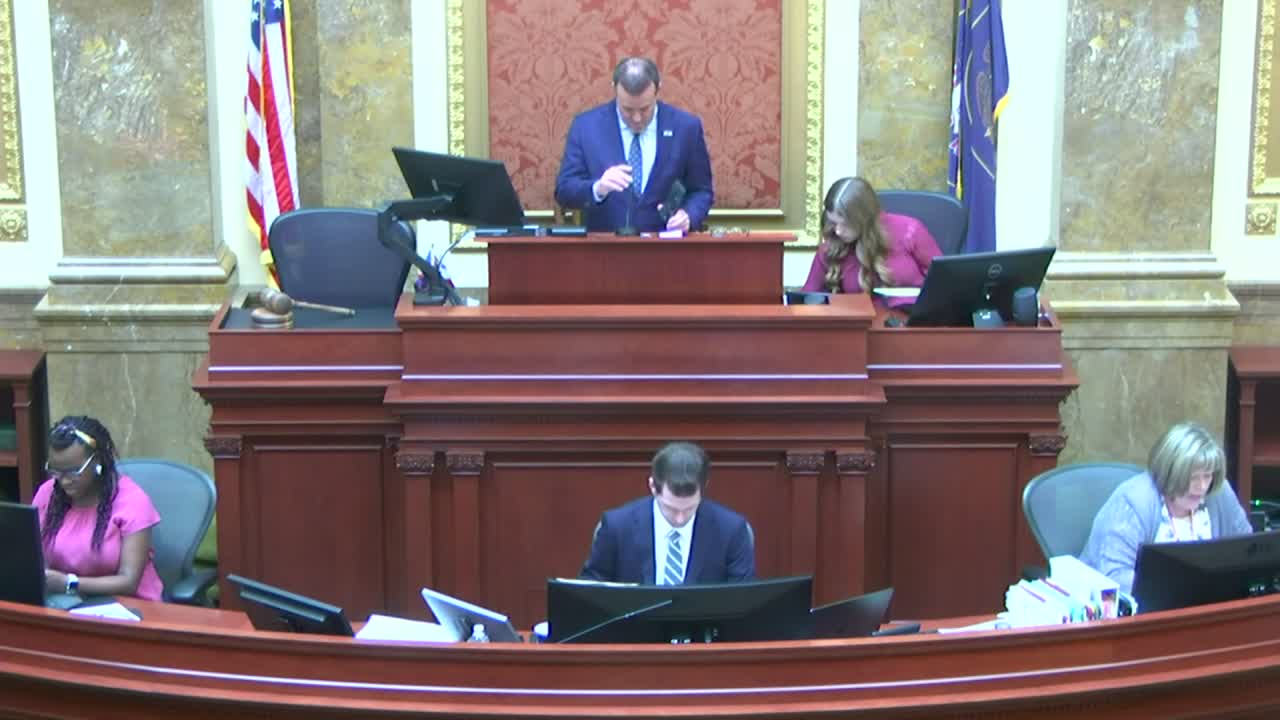
House approves bill clarifying state water engineer's role amid debate over 'public welfare' tests
Loading...
Summary
Lawmakers approved first-substitute HB 60 to narrow the state water engineer's decision factors to beneficial use (quantity, quality, availability), with sponsors saying protest rights are unchanged and critics seeking clarity on who decides 'public welfare.' The bill passed 54–17.
SALT LAKE CITY — The Utah House on Feb. 3 approved first-substitute House Bill 60, which narrows the state water engineer’s review in water-right applications to questions of beneficial use — specifically quantity, quality and availability of water — and seeks to limit other non-water issues to the appropriate agencies.
Representative Tiara Shallenberger, sponsor of the bill, told colleagues the measure "comes from the state water engineer's office, and the intent is to clarify the state water engineer's role." She said the change is intended to help the engineer manage a heavy caseload of about 16,000 permit applications annually and to keep non-water matters with agencies that specialize in them.
Supporters argued the bill is a clarification, not a roll back of protest rights. "Protesting is when an application comes in — you can still protest an application," Shallenberger said, adding that litigation standing on the back end still requires a particularized injury. "This does nothing to change or update someone's ability to protest an application," she said.
Opponents raised concerns about the bill's effect on determinations of the "public welfare." Representative Arthur asked who would assess whether a proposed plan is detrimental to public welfare if that determination is removed from the state engineer's purview, noting unresolved questions for communities and sovereign lands such as the Great Salt Lake. Shallenberger and other supporters replied that the state engineer retains authority when issues fall within beneficial-use factors and that other agencies (for example, DEQ or divisions within DNR) would address matters outside those factors.
Backers emphasized the bill was developed in a public, months-long process with the state's water task force and water commission and that it passed those bodies unanimously. Representative Albrecht said the bill "does not reduce water to the Great Salt Lake" and encouraged support.
The House voted 54–17 to send the first substitute of HB 60 to the Senate for consideration.
What happens next: The bill will go to the Utah Senate for its committee and floor consideration. Proponents said they expect continued stakeholder engagement as the measure advances.
Sources: Floor debate and votes at the House session on Feb. 3, 2026. Quotes from Representative Tiara Shallenberger and Representative Arthur as spoken on the House floor.